
Introduction
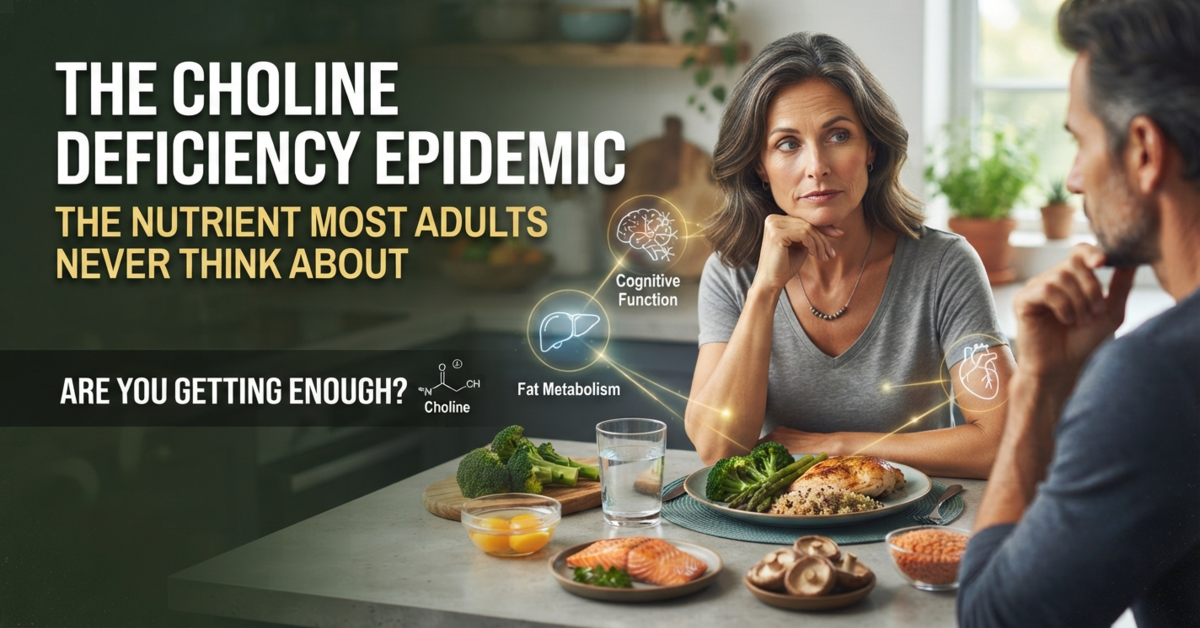
When people think about essential nutrients, vitamins like D, B12, and C often come to mind. Yet one of the most important nutrients for brain function, liver health, and metabolism remains largely overlooked: choline.
Despite being recognized as an essential nutrient, research suggests that most Americans fail to meet recommended choline intake levels. This silent nutritional gap may affect everything from memory and focus to fat metabolism and cardiovascular health.
As nutrition science advances, choline is increasingly being recognized as a cornerstone nutrient for lifelong wellness.
What Is Choline?
Choline is a water-soluble nutrient that plays a critical role in multiple biological functions. Although the body can produce small amounts, it cannot manufacture enough to meet daily requirements.
Choline is needed to produce:
- Acetylcholine, a neurotransmitter involved in memory and learning
- Phospholipids that build healthy cell membranes
- Compounds involved in fat metabolism
- Molecules required for methylation and DNA regulation
Unlike many vitamins, choline often receives little attention despite its broad impact on human health.
Why Choline Is Essential for Human Health
Brain Function and Cognitive Performance
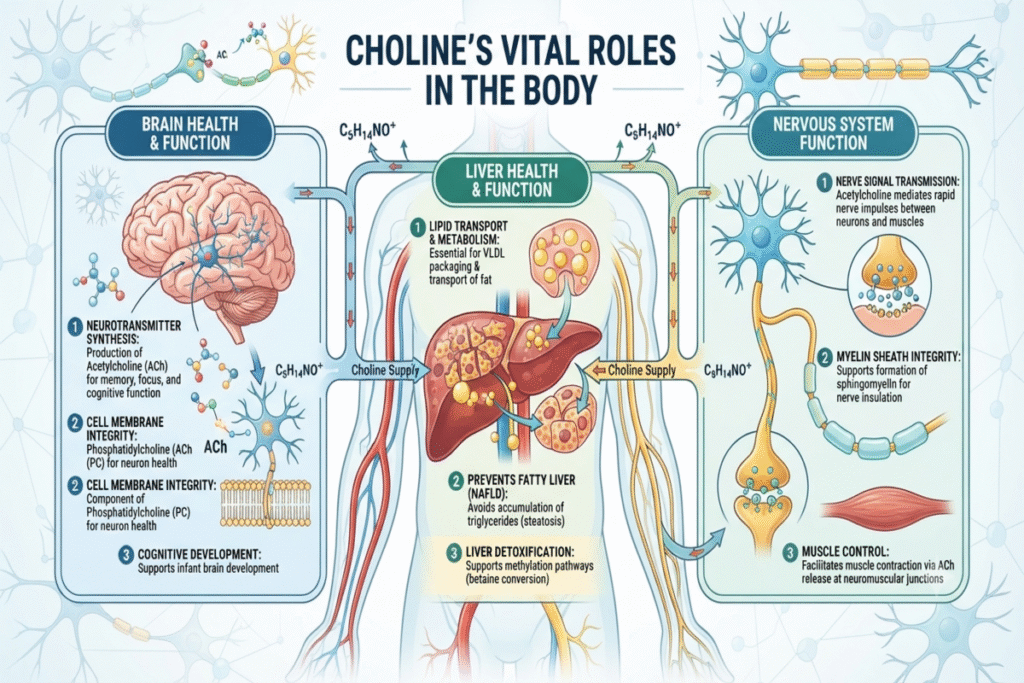
Choline serves as a precursor to acetylcholine, a neurotransmitter essential for learning, memory formation, and mental clarity.
Adequate intake may support:
- Focus and concentration
- Memory performance
- Healthy cognitive aging
- Nervous system communication
Liver Health
One of choline’s most important roles is helping transport fat out of the liver.
Without sufficient choline, fat can accumulate inside liver cells, increasing the risk of nonalcoholic fatty liver disease (NAFLD).
Metabolic Function
Choline participates in fat metabolism and energy production. It supports the body’s ability to process nutrients efficiently and maintain healthy cellular function.
Pregnancy and Fetal Development
Research shows that choline plays a critical role in fetal brain and nervous system development.
Pregnant women have significantly increased choline needs, yet many do not meet recommended intake levels.
Why So Many Americans Are Falling Short
Several factors contribute to widespread choline inadequacy.
Reduced Consumption of Traditional Choline Sources
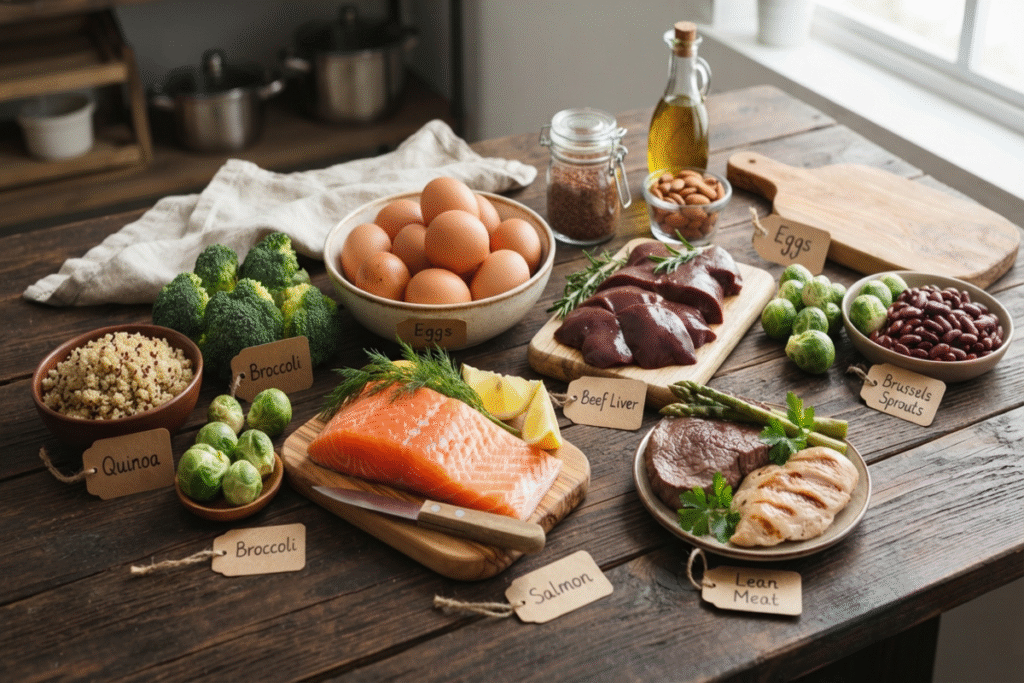
Foods naturally rich in choline include:
- Egg yolks
- Liver
- Seafood
- Beef
Many modern dietary patterns limit these foods.
Fear of Dietary Cholesterol
For years, eggs were unfairly criticized due to cholesterol concerns, leading many people to avoid one of the richest choline sources available.
Plant-Based Eating Patterns
While plant-based diets can be healthy, they often provide less choline unless carefully planned.
Ultra-Processed Food Consumption
Many processed foods are calorie-dense but nutrient-poor, making it harder to achieve adequate choline intake.
Signs and Symptoms of Choline Deficiency
Choline deficiency can develop gradually and may be difficult to recognize.
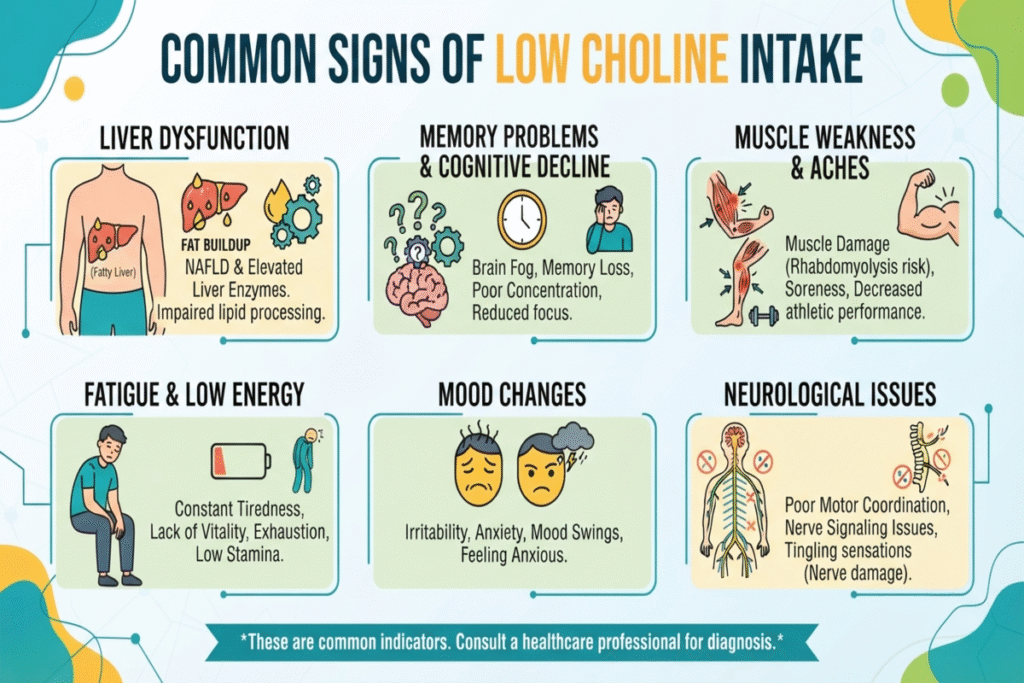
Potential symptoms include:
- Brain fog
- Poor concentration
- Memory difficulties
- Fatigue
- Muscle damage
- Elevated liver enzymes
- Increased fat accumulation in the liver
- Reduced exercise recovery
Because these symptoms overlap with many other conditions, deficiency often goes undetected.
The Surprising Benefits of Adequate Choline Intake
1. Supports Brain Health
Choline contributes to healthy neurotransmitter production and cognitive performance throughout life.
2. Promotes Healthy Liver Function
Adequate intake helps prevent excessive fat buildup in the liver.
3. Enhances Metabolic Health
Choline supports healthy fat metabolism and energy utilization.
4. Supports Healthy Pregnancy
Emerging research suggests higher maternal choline intake may benefit fetal brain development.
5. Contributes to Muscle Function
Choline supports nerve signaling involved in muscle contraction and performance.
6. Supports Healthy Aging
By supporting brain and cellular health, choline may contribute to long-term cognitive resilience.
Best Food Sources of Choline
| Food | Approximate Choline Content |
|---|---|
| Beef Liver (3 oz) | 350+ mg |
| Egg (1 large) | 145 mg |
| Salmon (3 oz) | 180 mg |
| Chicken Breast (3 oz) | 70 mg |
| Shrimp (3 oz) | 115 mg |
| Soybeans (1 cup) | 100+ mg |
| Brussels Sprouts (1 cup) | 60 mg |
| Broccoli (1 cup) | 30 mg |
Daily Adequate Intake
| Group | Daily Choline Recommendation |
|---|---|
| Men | 550 mg |
| Women | 425 mg |
| Pregnant Women | 450 mg |
| Breastfeeding Women | 550 mg |
Who Is Most at Risk for Deficiency?
Certain populations face a higher risk of inadequate choline intake.
Higher-Risk Groups
- Pregnant women
- Breastfeeding women
- Older adults
- Vegans
- Vegetarians
- Individuals with liver disease
- Endurance athletes
- People consuming highly processed diets
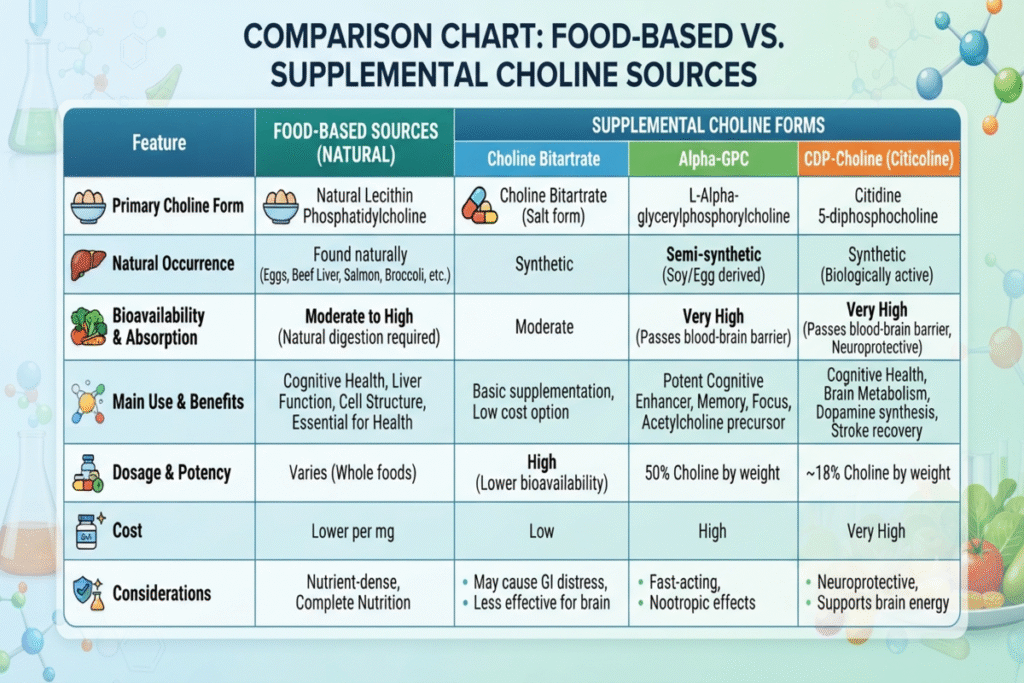
Can Supplements Help?
Food should remain the primary source of choline whenever possible.
However, supplementation may be appropriate for individuals with higher requirements or limited dietary intake.
Common forms include:
- Choline bitartrate
- Alpha-GPC
- CDP-Choline (Citicoline)
Individuals should consult healthcare professionals before beginning supplementation.
Practical Checklist for Increasing Choline Intake
✅ Include eggs regularly in your diet
✅ Consume seafood several times weekly
✅ Prioritize whole-food protein sources
✅ Increase intake of cruciferous vegetables
✅ Limit ultra-processed foods
✅ Monitor nutrient intake during pregnancy
✅ Discuss supplementation with your healthcare provider if needed
Expert Insights
“Choline is one of the most under-consumed nutrients in the American diet despite its essential role in brain development and liver health.”
— Researchers from the National Institutes of Health Office of Dietary Supplements
FAQs
1. What does choline do in the body?
Choline supports brain function, liver health, fat metabolism, cell membrane integrity, and nervous system communication.
2. Is choline a vitamin?
No. Choline is considered an essential nutrient but is not officially classified as a vitamin.
3. Can low choline affect memory?
Yes. Choline is needed to produce acetylcholine, a neurotransmitter involved in memory and learning.
4. Are eggs the best source of choline?
Egg yolks are among the richest and most convenient dietary sources.
5. Can vegetarians get enough choline?
Yes, but it often requires careful dietary planning and attention to food choices.
6. Does choline support liver health?
Yes. Choline plays a key role in transporting fat out of the liver and supporting normal liver function.
7. Should everyone take a choline supplement?
Not necessarily. Many people can meet their needs through a nutrient-dense diet.
Authoritative Resources
- National Institutes of Health Office of Dietary Supplements
- Harvard T.H. Chan School of Public Health
- Cleveland Clinic
Other Interesting Articles
- Protein Distribution Timing: Why It Matters More Than Total Protein Intake
- The Polyphenol Paradox: Why Plant Compounds Work Better in Whole Foods
Conclusion
Choline may not receive the same attention as vitamin D or omega-3 fatty acids, but its importance should not be underestimated. From supporting memory and focus to maintaining healthy liver function and metabolism, choline plays a foundational role in human health.
As awareness grows, paying closer attention to choline intake may become one of the simplest and most effective nutritional upgrades Americans can make for long-term wellness.