
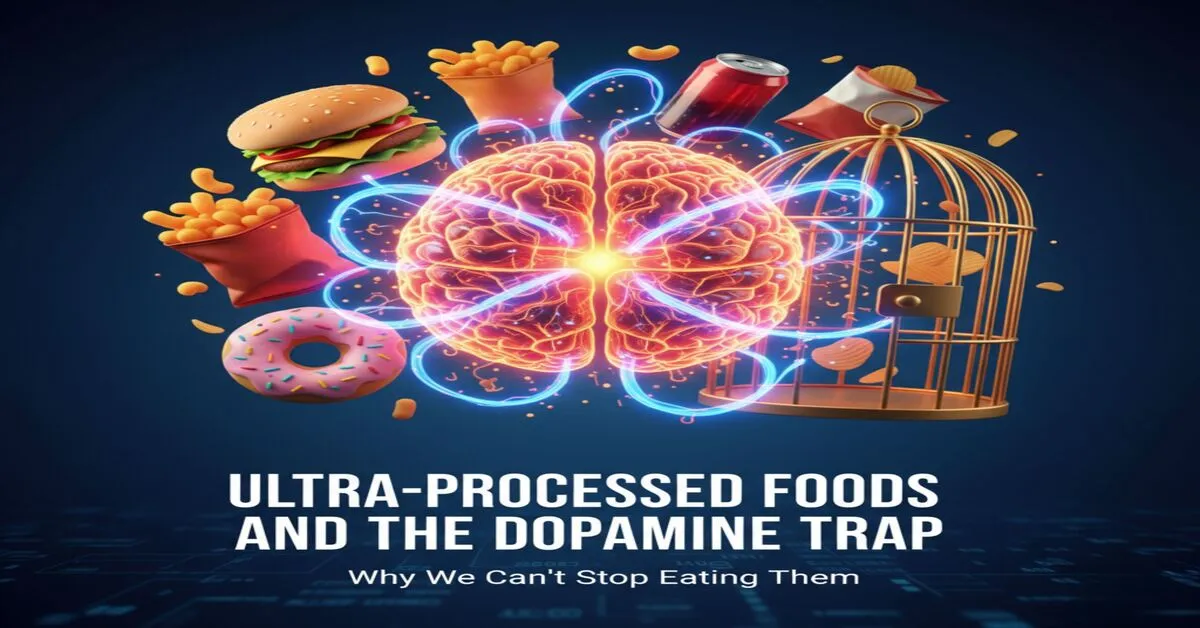
Walk down any supermarket aisle in America, and you’ll find an endless selection of brightly packaged snacks — “healthy” protein bars, flavored yogurts, energy drinks, and low-fat chips.
They promise convenience and satisfaction, but beneath the surface, they hijack the brain’s dopamine reward system — training us to crave more while giving us less. Dopamine is a pleasure chemical or we can say a feel good hormone produced by the adrenal glands, which are located on top of your kidneys.
This is the Dopamine Trap — the neuroscience-backed reason why ultra-processed foods are so addictive, even when we know they’re unhealthy.
What Are Ultra-Processed Foods (UPFs)?
Ultra-processed foods are industrial formulations that contain ingredients not used in home cooking — emulsifiers, flavor enhancers, colorants, and synthetic additives.
They’re designed to be hyper-palatable, convenient, and shelf-stable — at the cost of nutrition and metabolic balance.
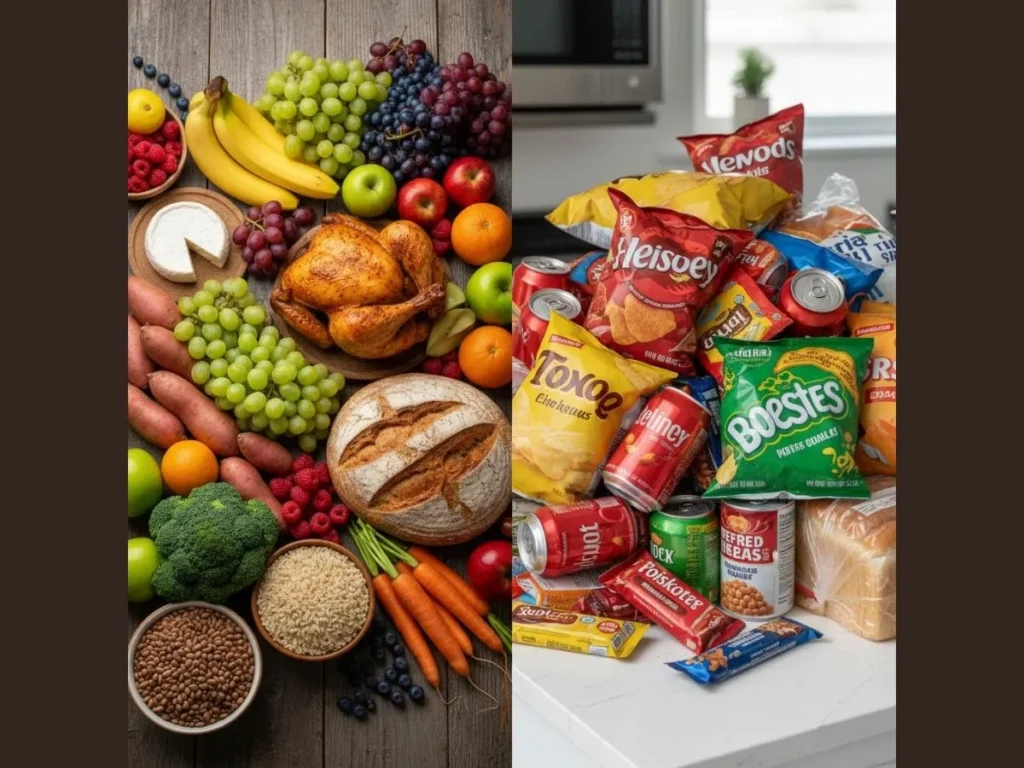
According to the NOVA classification, foods fall into four categories:
| NOVA Group | Example | Description |
|---|---|---|
| Group 1 | Fresh fruits, vegetables, grains | Unprocessed or minimally processed |
| Group 2 | Oils, butter, sugar | Processed culinary ingredients |
| Group 3 | Cheese, canned beans, bread | Processed foods |
| Group 4 | Chips, sodas, energy bars | Ultra-processed foods (UPFs) |
In the US, nearly 60% of total calorie intake now comes from Group 4 foods (CDC, 2024).
The Dopamine Trap: How UPFs Hijack the Brain
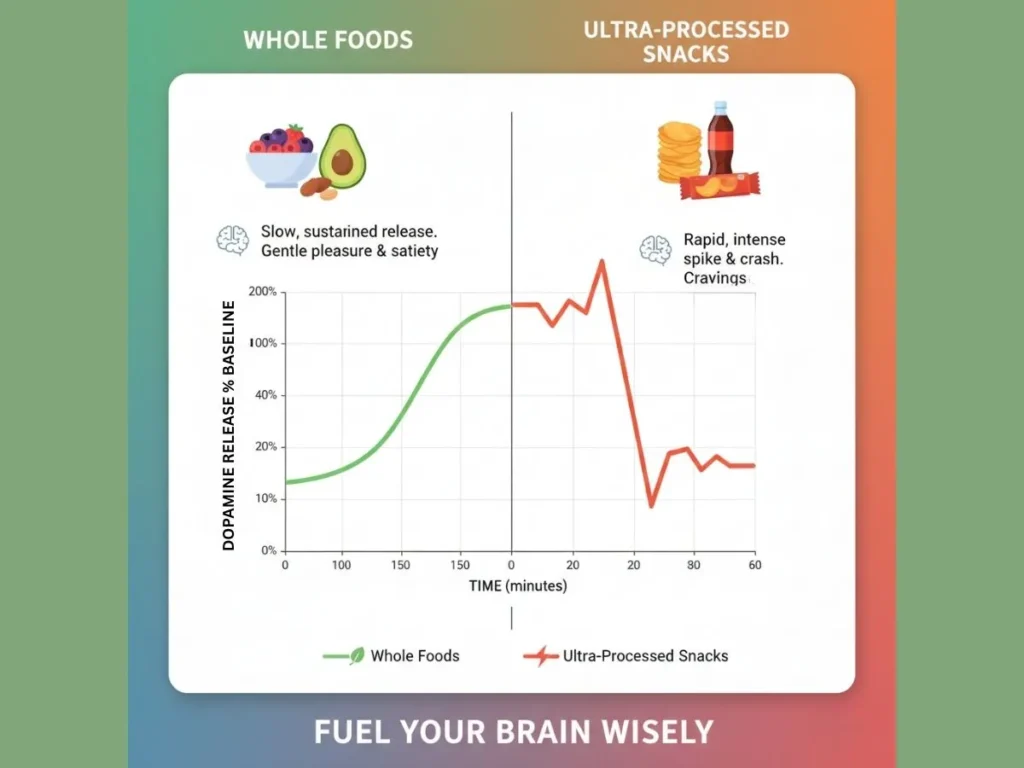
Dopamine is the brain’s motivation and reward neurotransmitter — released when we experience something pleasurable or novel.
UPFs are engineered to stimulate dopamine spikes through the perfect blend of sugar, salt, and fat, mimicking the neural effects of addictive substances.
1. The Bliss Point Engineering
Food companies employ “bliss point” science — the precise ratio of sweetness, saltiness, and texture that maximizes pleasure without fullness.
This keeps you eating long after hunger ends.
“Ultra-processed foods exploit reward circuits the same way slot machines do — rapid feedback, uncertain reward, and instant gratification.”
— Dr. Ashley Gearhardt, University of Michigan Food Addiction Researcher
2. Dopamine Desensitization
Constant exposure to these dopamine spikes causes downregulation of D2 receptors, meaning you need more food for the same pleasure — similar to tolerance in addiction.
3. The Loss of Nutritional Feedback
Whole foods signal satiety through hormones like leptin and GLP-1. UPFs bypass this, providing calories without fullness — creating a biological mismatch between craving and satisfaction.
Why Your Brain Can’t “Just Stop Eating” Them
| Brain Mechanism | Trigger | Effect |
|---|---|---|
| Dopamine surge | Sugar + fat combo | Pleasure spike |
| Reward prediction error | Unpredictable taste/texture | More craving |
| Low satiety signaling | Lack of fiber, protein | Persistent hunger |
| Habit formation | Repeated snacking | Reinforced behavior |
Over time, UPFs reshape neural pathways in the striatum and prefrontal cortex, weakening impulse control and amplifying emotional eating — especially under stress.
The U.S. Reality Check
- Children and teens in the U.S. get 67% of daily calories from ultra-processed foods (JAMA, 2023).
- Adults consuming more than 50% of calories from UPFs show a 28% higher risk of depression (American Journal of Clinical Nutrition, 2024).
- High dopamine diet patterns correlate with greater BMI and metabolic dysfunction across multiple U.S. studies.
Breaking the Dopamine Loop: Science-Backed Strategies
| Strategy | What It Does | Example |
|---|---|---|
| Rebuild real reward pathways | Reintroduces natural dopamine response | Exercise, sun exposure, deep breathing |
| Crowd out UPFs | Gradually displaces junk food | Add fresh snacks like nuts or fruit before cravings hit |
| Eat slow-digesting meals | Stabilizes dopamine and blood sugar | Protein + fiber + healthy fats combo |
| Sleep 7–9 hours | Balances dopamine receptors | Supports self-control and appetite regulation |
| Mindful eating rituals | Restores brain-body connection | Eat without screens or multitasking |
Expert Quote
“Our brains evolved to seek out calorie-dense food in a scarce environment. The modern food landscape turns that survival mechanism into a trap.”
— Dr. Nicole Avena, Neuroscientist and author of “Why Diets Fail”
Authoritative Resources
- Harvard Health Publishing – The Addictive Nature of Processed Foods
- National Institutes of Health – Dopamine and Food Reward Pathways
Other Interesting Article on Fitoast
FAQ: Ultra-Processed Foods and Dopamine
Q1. Why do ultra-processed foods feel addictive?
They trigger repeated dopamine surges without satiety signals, causing cravings similar to addictive substances.
Q2. Can you retrain your dopamine system?
Yes — through sleep, exercise, real food, and limiting UPFs, dopamine sensitivity can be restored within weeks.
Q3. Are all processed foods bad?
No. Minimally processed items like canned beans or yogurt can be healthy. The danger lies in ultra-processing and additives.
Q4. Do artificial sweeteners affect dopamine?
Yes — they trick taste receptors but don’t deliver calories, disrupting natural reward feedback loops.
Q5. What’s the first step to break the UPF cycle?
Start by replacing one daily UPF meal with a whole-food option and track how your cravings shift.
Actionable Checklist: Dopamine Reset Routine
| Time | Habit | Impact |
|---|---|---|
| Morning | Protein-rich breakfast | Stabilizes dopamine and blood sugar |
| Midday | Walk or sunlight exposure | Boosts natural dopamine production |
| Afternoon | Swap processed snack for nuts/fruit | Reduces dopamine overstimulation |
| Evening | Limit blue light, practice mindful meal | Improves receptor recovery |
| Night | Sleep 8 hours | Rebalances dopamine pathways |
Conclusion
Ultra-processed foods are more than just empty calories — they’re neurochemical disruptors engineered for endless consumption.
Understanding the dopamine trap isn’t about guilt; it’s about awareness. When you reclaim your brain’s reward system, real food starts tasting better again — naturally.
It’s time to eat for pleasure and control, not for dopamine manipulation.
You are a genius