
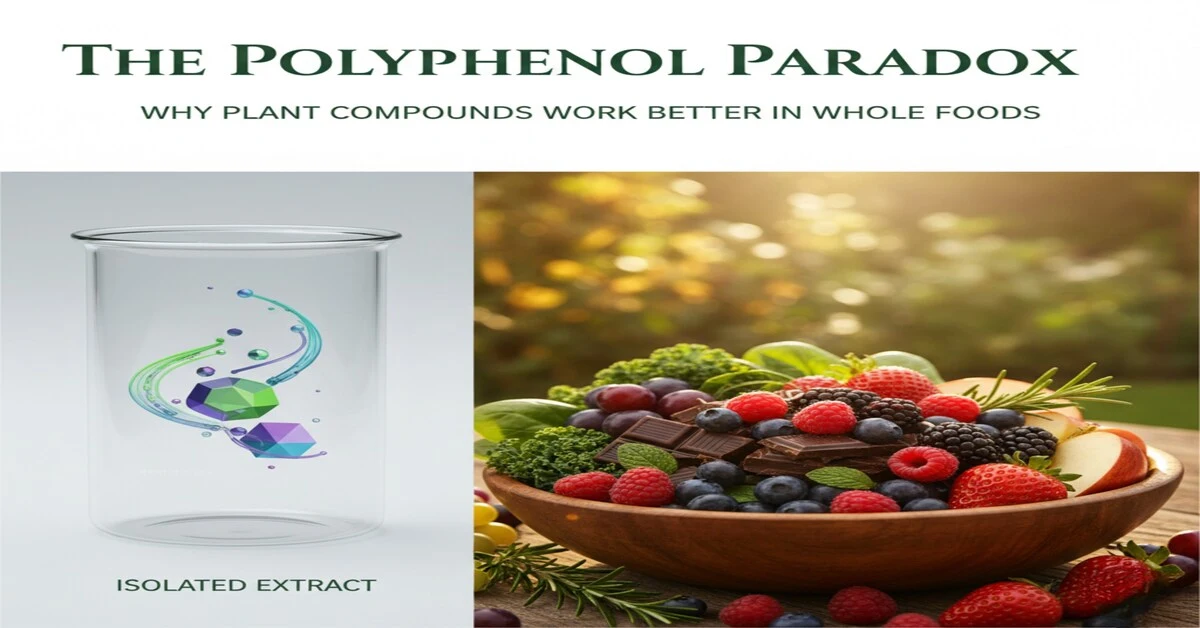
In recent years, polyphenol supplements — from green tea extracts to resveratrol capsules — have flooded the wellness market, promising longevity, better heart health, and anti-aging effects. But emerging research in 2025 reveals a surprising truth: polyphenols work best when consumed in their natural, whole-food form, not as isolates.
Welcome to the Polyphenol Paradox — where less precision and more synergy might be the real key to harnessing the power of plant compounds.
What Are Polyphenols?
Polyphenols are naturally occurring compounds found in plants that protect them from UV damage, pathogens, and oxidation. In humans, they act as antioxidants, anti-inflammatory agents, and even signaling molecules that influence how our genes express themselves.
There are over 8,000 known polyphenols, categorized into four major groups:
| Type | Common Sources | Key Health Benefit |
|---|---|---|
| Flavonoids | Berries, apples, onions, dark chocolate | Anti-inflammatory, vascular health |
| Phenolic acids | Coffee, tea, whole grains | Antioxidant defense |
| Polyphenolic amides | Chili peppers, oats | Metabolic regulation |
| Resveratrol & stilbenes | Grapes, red wine, peanuts | Longevity & DNA protection |
The Paradox: Why Supplements Fall Short
While polyphenol supplements can deliver a concentrated dose, they often fail to provide the same health impact seen in diets rich in fruits, vegetables, and whole grains.
The reason lies in bioavailability and food synergy — the way compounds interact inside your body.
1. Synergistic Interactions Matter
Whole foods contain fiber, fats, vitamins, and other phytochemicals that enhance absorption. For example, olive oil’s healthy fats help absorb carotenoids from tomatoes — a synergy lost in supplement form.
2. Dose Does Not Equal Benefit
High-dose resveratrol supplements can actually blunt exercise benefits or interfere with insulin sensitivity. In contrast, small, food-based doses gently support your body’s natural defense pathways.
3. The Gut Connection
Polyphenols are mostly metabolized by gut bacteria into active compounds. Without the fiber and co-factors found in real foods, supplements bypass this crucial step — reducing their effectiveness.
Whole Food Polyphenols: The Synergy Advantage
| Food Source | Key Polyphenol | Supporting Nutrients | Synergistic Benefit |
|---|---|---|---|
| Blueberries | Anthocyanins | Vitamin C, fiber | Enhanced antioxidant response |
| Green Tea | Catechins | L-theanine | Calm focus and metabolic balance |
| Olive Oil | Hydroxytyrosol | Healthy fats | Improved polyphenol absorption |
| Cocoa | Flavanols | Magnesium | Better blood flow and brain function |
| Red Grapes | Resveratrol | Vitamin K | Longevity and vascular support |

Modern Lifestyle, Modern Deficiency
Americans are consuming fewer plant-based foods and relying more on processed diets, leading to polyphenol deficiency at the cellular level.
Data from the USDA Food Patterns Study (2024) shows that the average American gets less than 25% of daily polyphenol needs due to lack of fruit and vegetable diversity.
Experts warn this could be linked to rising rates of oxidative stress, chronic fatigue, and cognitive decline.
Benefits of Getting Polyphenols from Whole Foods
1. Improved Cellular Defense
Whole-food polyphenols enhance the body’s own antioxidant enzymes like glutathione peroxidase and superoxide dismutase — creating long-term resilience, not quick fixes.
2. Better Gut-Brain Connection
When digested naturally, polyphenols feed beneficial bacteria that produce short-chain fatty acids (SCFAs), improving mood, immunity, and brain clarity.
3. Cardiometabolic Health
Whole polyphenols help balance LDL cholesterol, triglycerides, and insulin sensitivity, reducing heart and metabolic risks.
4. Sustained Cognitive Energy
Plant compounds like flavanols and catechins improve blood flow to the brain, supporting focus and memory.
Expert Insight
“It’s the orchestra, not the soloist, that creates health. Isolated polyphenols miss the harmony that whole foods naturally deliver.”
— Dr. Joseph Hibbeln, Nutritional Neuroscientist, NIH (2025)
How to Maximize Polyphenol Intake (Actionable Guide)
| Strategy | Example | Benefit |
|---|---|---|
| Eat the Rainbow | Mix berries, leafy greens, colorful peppers | Broad polyphenol spectrum |
| Pair Polyphenols with Fats | Olive oil with tomatoes, avocado with spinach | Boosts absorption |
| Go Minimal on Processing | Choose whole coffee beans, unsweetened cocoa | Preserves compounds |
| Diversify Your Beverages | Rotate green tea, black tea, coffee, red wine (in moderation) | Activates multiple pathways |
| Skip Isolated Supplements | Focus on polyphenol-rich meals | Natural synergy and gut activation |
Authoritative Resources
- National Institutes of Health – Polyphenols and Human Health
- Harvard T.H. Chan School of Public Health – Plant Compounds in Whole Diets
- American Journal of Clinical Nutrition – Food Matrix and Bioavailability Study
Other Interesting Article
FAQ: The Polyphenol Paradox
Q1. Are polyphenol supplements useless?
Not useless, but less effective than eating polyphenol-rich foods due to missing synergistic nutrients and gut activation.
Q2. How many servings of polyphenol-rich foods should I eat daily?
Aim for 5–7 servings of colorful plant foods spread across meals.
Q3. Can I combine supplements with whole foods?
Yes, but focus on whole foods first. Supplements should fill gaps, not replace real food.
Q4. Does cooking destroy polyphenols?
Some heat-sensitive compounds degrade, but steaming or quick sautéing retains most benefits.
Q5. Which beverage is highest in natural polyphenols?
Black coffee and green tea top the list, followed by red wine in moderation.
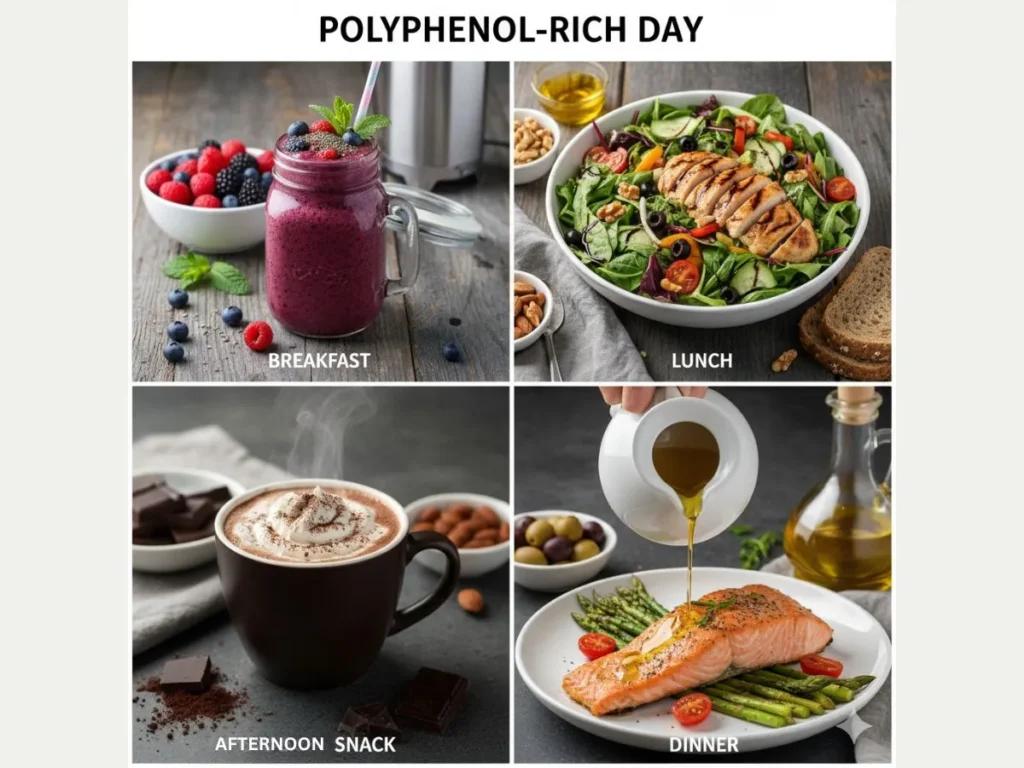
Actionable Checklist: Daily Polyphenol Boost Plan
| Time | Action | Example |
|---|---|---|
| Morning | Start with a polyphenol smoothie | Blueberries + spinach + green tea |
| Midday | Eat a rainbow salad | Olive oil dressing + colorful veggies |
| Afternoon | Swap snack for nuts + dark chocolate | Almonds + 85% cacao |
| Evening | Include cooked vegetables and herbs | Turmeric, rosemary, or kale |
| Night | End with polyphenol-rich tea | Hibiscus or chamomile |
Conclusion
The Polyphenol Paradox reminds us that nature designed foods for synergy, not isolation.
While supplements promise shortcuts, whole foods deliver complexity, activating antioxidant defenses, gut health, and cellular longevity in ways pills can’t replicate.
Real health doesn’t come in a capsule — it comes from the plate.