
For millions of Americans, sleep isn’t restorative anymore — it’s survival. Decades of chronic insomnia, night-time scrolling, and caffeine abuse have eroded the body’s natural sleep drive, leaving people exhausted even after eight hours in bed.
But in 2025, neuroscience and behavioral sleep medicine have revealed something empowering: you can retrain your brain to crave deep, rejuvenating sleep again.
This is your blueprint to resetting your sleep drive, rebuilding circadian rhythm balance, and finally waking up energized — naturally.
Understanding the “Sleep Drive” Mechanism
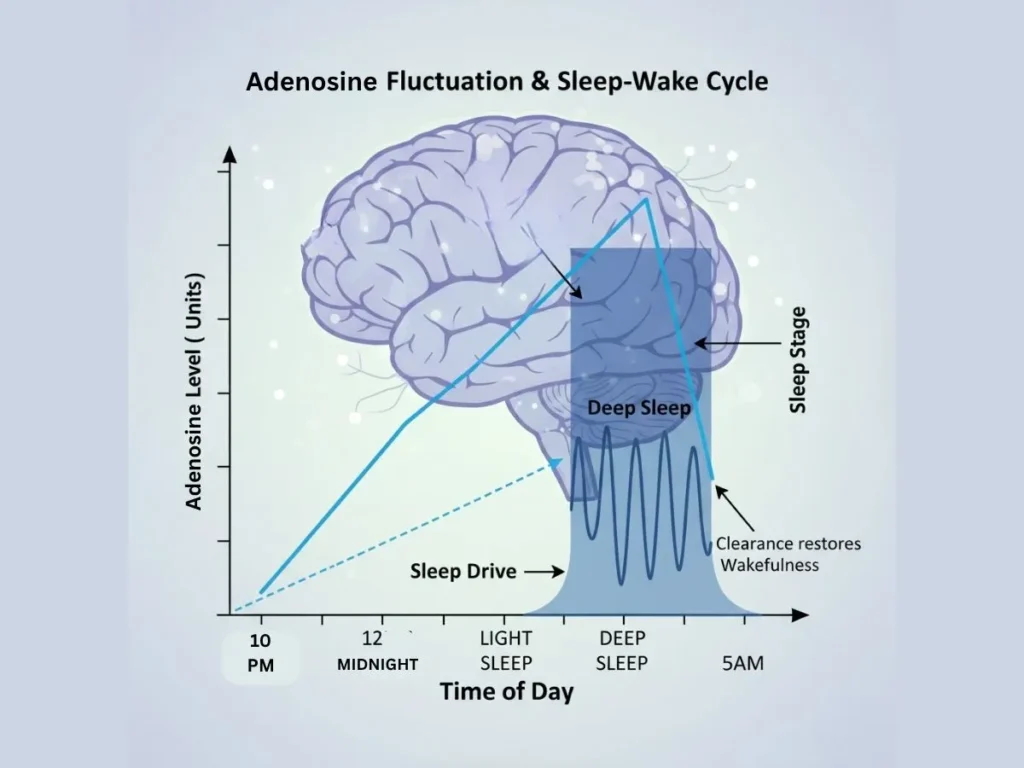
Your sleep drive (technically called homeostatic sleep pressure) builds throughout the day. The longer you’re awake, the more adenosine — a neurotransmitter that promotes sleepiness — accumulates in your brain.
When your sleep drive is strong, you fall asleep quickly and stay asleep longer.
When it’s weak, you toss, turn, or wake frequently.
Why It Gets Disrupted:
- Caffeine overuse: Blocks adenosine receptors and masks fatigue signals.
- Inconsistent bedtimes: Prevent adenosine from peaking properly.
- Artificial light at night: Suppresses melatonin release and disrupts the sleep-wake rhythm.
- Chronic stress: Keeps cortisol high, blunting the sleep drive’s natural rise.
The Cost of a Broken Sleep Drive
Insomnia doesn’t just cause tiredness — it rewires metabolism, hormones, and brain chemistry.
Research from the American Academy of Sleep Medicine links chronic sleep deprivation to:
| Consequence | Explanation |
|---|---|
| Metabolic Slowdown | Reduced insulin sensitivity and fat oxidation |
| Memory Impairment | Hippocampal function declines without deep sleep |
| Anxiety & Depression | Dysregulated serotonin and cortisol |
| Weakened Immunity | Reduced natural killer cell activity |
| Hormonal Imbalance | Lower testosterone, disrupted thyroid signaling |
How to Reset Your Sleep Drive (Step-by-Step)
Rebuilding your sleep drive requires consistency, not complexity. Here’s the science-backed plan experts use to reset sleep pressure and circadian timing.
Step 1: Reinforce Wake Time (Even on Weekends)
Wake up at the same time daily, no matter how poorly you slept. This stabilizes your body clock and lets adenosine accumulate predictably throughout the day.
👉 Pro Tip: Get 15 minutes of sunlight within 30 minutes of waking up to anchor your circadian rhythm.

Step 2: Delay Caffeine for 90 Minutes After Waking
Early caffeine blocks the adenosine build-up you need for healthy sleep drive. Waiting 90–120 minutes allows natural wake hormones (cortisol) to peak before you sip.
Step 3: Build Sleep Pressure Naturally Through Movement
Exercise — especially aerobic training before 6 PM — increases adenosine production and enhances deep sleep quality.
Avoid high-intensity workouts close to bedtime as they elevate adrenaline and core body temperature.
Step 4: Use Light Strategically
- Morning: Bright natural light (or 10,000 lux lamp)
- Afternoon: Natural exposure outdoors
- Evening: Dim lights, red/orange tones, no screens 1 hour before bed

Step 5: Optimize Evening Wind-Down
Your pre-bed behavior signals the brain whether it’s time to rest or stay alert. Build a consistent “digital sunset” routine:
- No screens 60–90 minutes before bed
- Listen to calm music or read a paperback
- Stretch, journal, or meditate
- Keep bedroom temperature between 60–67°F
Step 6: Leverage Sleep-Drive Supportive Nutrients
| Nutrient | Function | Best Sources |
|---|---|---|
| Magnesium Glycinate | Calms the nervous system | Spinach, almonds, supplements |
| Glycine | Lowers core body temp | Collagen, bone broth |
| Taurine | Supports GABA receptors | Seafood, turkey |
| L-Theanine | Reduces stress hormones | Green tea |
| Tryptophan | Precursor to melatonin | Turkey, oats, seeds |

Step 7: Use Short-Term Sleep Aids Responsibly
If insomnia is severe, short-term use of melatonin (0.3–1 mg) or magnesium glycinate can help regulate rhythm — but long-term reliance can weaken the body’s natural regulation.
Consult a healthcare provider before introducing any supplements.
Expert Insight
“Most people don’t have insomnia — they have inconsistent sleep pressure. The brain simply forgets how to fall asleep because the signals have been drowned by caffeine, light, and stress.”
— Dr. Andrew Huberman, Neuroscientist, Stanford University
Authoritative Resources
- American Academy of Sleep Medicine – Healthy Sleep Habits
- National Sleep Foundation – Sleep Drive and Circadian Health
- Harvard Health – Resetting Your Internal Sleep Clock
Other Interesting Article
FAQ: Sleep Drive & Deep Sleep Recovery
Q1. Can you really rebuild sleep drive after years of insomnia?
Yes — studies show consistent circadian cues and behavioral changes can reset adenosine buildup and melatonin balance in as little as 2–4 weeks.
Q2. Is melatonin safe for long-term use?
Low-dose melatonin may help short term, but long-term reliance can suppress natural melatonin production.
Q3. Why do some people sleep worse after exercising?
Late-night workouts raise core temperature and adrenaline, delaying deep sleep onset.
Q4. What time should I stop caffeine?
Avoid caffeine within 8 hours of bedtime to prevent adenosine receptor interference.
Q5. Can blue light blockers help restore sleep drive?
Yes — blue light filtering glasses or screen apps reduce melatonin suppression from evening device use.
Conclusion
Your sleep drive isn’t broken — it’s buried under years of overstimulation and poor rhythms. By rebuilding consistency, respecting natural light cues, and fueling your brain with sleep-promoting nutrients, you can restore deep, rejuvenating sleep naturally.
The process takes time, but once your brain learns to trust the rhythm again, restorative rest returns — night after night.