
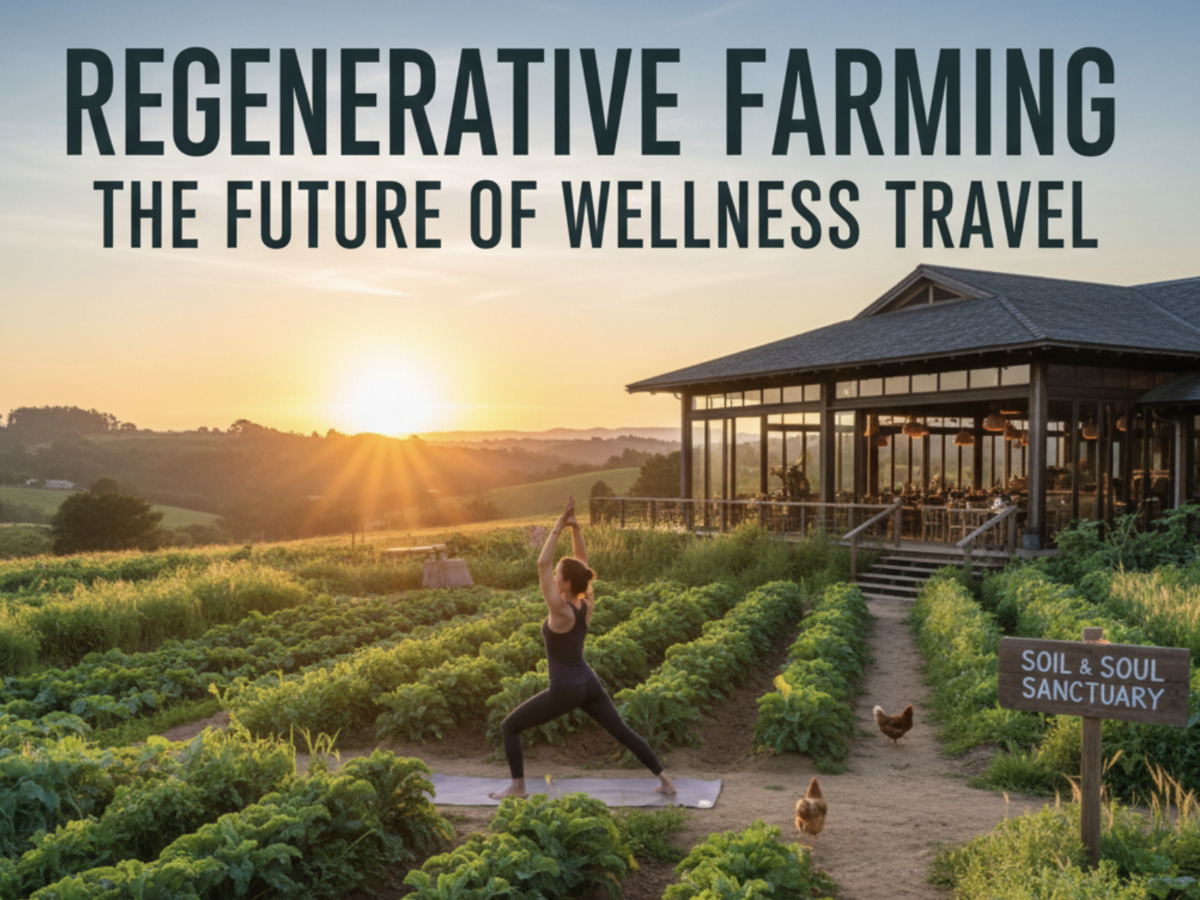
Introduction: Why Regenerative Farming Is the New Wellness Frontier
Wellness tourism is evolving. Beyond yoga retreats and spa vacations, a growing trend is attracting Americans seeking deeper, sustainable experiences—regenerative farming-based travel.
Unlike traditional agri-tourism, regenerative wellness travel integrates hands-on farming, organic meals, and mindful practices in settings that restore both people and the planet. For health-conscious Americans, this means traveling not only for relaxation but also for purposeful rejuvenation and environmental impact.

The Science Behind Regenerative Agriculture
Regenerative farming is more than “organic.” It focuses on restoring ecosystems and building long-term soil health through:
- Crop diversity
- Minimal tillage
- Cover cropping
- Rotational grazing
- Composting and carbon sequestration
Statistic: According to a 2024 Rodale Institute report, regenerative farms can increase soil carbon storage by up to 78% compared to conventional farming, directly combating climate change.
How Regenerative Farming Shapes Wellness Travel
In wellness retreats, regenerative farming is not just a backdrop—it’s part of the guest experience:
- Farm-to-table organic meals cooked with freshly harvested produce
- Workshops on soil health, herbal remedies, and food sovereignty
- Morning yoga in regenerative fields
- Mindful farming practices that double as meditation
This makes travel immersive, educational, and restorative on multiple levels.
Health Benefits for Travelers
- Nutrient-rich meals grown without pesticides
- Stress reduction from time spent in natural environments
- Physical activity through light farm work and nature walks
- Gut health improvement via high-fiber, organic foods
- Mental clarity from digital detox in farm settings
Expert Quote:
“Regenerative travel allows guests to recharge their health while reconnecting with the land—something modern life has stripped away,” says Dr. Alan Pierce, Environmental Wellness Researcher, UCLA.
Environmental & Community Benefits
- Revives soil health and reduces carbon emissions
- Conserves water and enhances biodiversity
- Supports local farmers and rural economies
- Educates travelers about sustainable living practices
Types of Regenerative Wellness Retreats in the U.S.
- Farm Stays: Guests live on regenerative farms and join daily activities
- Luxury Eco-Resorts: High-end wellness experiences integrated with sustainable farming
- Educational Retreats: Workshops on herbal medicine, permaculture, and mindfulness
- Community-Based Farms: Guests work alongside local farmers and contribute to sustainability projects
Actionable Guide: How to Experience Regenerative Farming
- Research farms with regenerative certifications (such as Regenerative Organic Certified).
- Choose retreats that offer holistic wellness activities (yoga, meditation, workshops).
- Prioritize locations close to home to reduce carbon footprint.
- Engage in hands-on practices like composting or planting.
- Support local artisans and food cooperatives near your retreat.
Practical Checklist for Travelers
✅ Verify the farm’s regenerative practices
✅ Ask about locally sourced meals
✅ Pack comfortable outdoor clothing
✅ Limit tech use—embrace nature immersion
✅ Journal daily reflections for mindfulness
✅ Support local farmers post-trip by buying their produce
Table: Conventional vs. Regenerative Travel Experiences
| Aspect | Conventional Wellness Travel | Regenerative Wellness Travel |
|---|---|---|
| Food | Imported, sometimes processed | Fresh, farm-to-table organic meals |
| Activities | Yoga, spa, relaxation | Yoga + hands-on farming + sustainability |
| Environmental Impact | Neutral or negative (travel footprint) | Positive (soil health, carbon reduction) |
| Connection | Tourist-consumer | Guest-participant in ecosystem |
Expert Insights on Regenerative Wellness
“Most people think travel is about escape. Regenerative wellness shifts the mindset—it’s about contribution and healing, both for yourself and the environment,” notes Sarah Long, Founder of GreenPath Retreats.
Common Myths & FAQ
Q1: Is regenerative wellness travel expensive?
A: Not necessarily—farm stays can be budget-friendly compared to luxury resorts.
Q2: Do I need farming experience?
A: No, retreats are designed for beginners and focus on gentle, enjoyable activities.
Q3: Is this only for eco-enthusiasts?
A: No, anyone seeking wellness, mindfulness, and healthier food can benefit.
Q4: Will it feel like “work” instead of vacation?
A: Activities are optional and designed to be restorative, not exhausting.
Authoritative Resources
For more information on regenerative farming and sustainable travel:
- Rodale Institute – Regenerative Agriculture Research
- Regenerative Travel – Sustainable Tourism Collective
- Regenerative Organic Alliance – Certification & Standards
Conclusion & Call-to-Action
Regenerative farming isn’t just the future of agriculture—it’s the future of wellness travel. By combining mindful living with sustainable farming, travelers can nourish their bodies, rejuvenate their minds, and leave a positive footprint on the planet.
👉 Next Step: Explore a regenerative retreat near you. Begin with a weekend farm stay, reconnect with the land, and transform your wellness journey from consumption to contribution.