

Modern diets may look healthier than ever on the surface — fresh salads, grass-fed meats, cold-pressed juices — but the nutrient density of U.S.-grown food has been quietly declining for decades. The culprit isn’t just over-processing or poor choices; it’s the soil itself.
As industrial farming practices have stripped American soils of minerals and microbial life, our foods have become less nourishing. Regenerative agriculture is emerging as a science-backed solution to restore both soil health and the nutrient content of the foods we eat.
The New Nutrient Crisis in Modern Foods
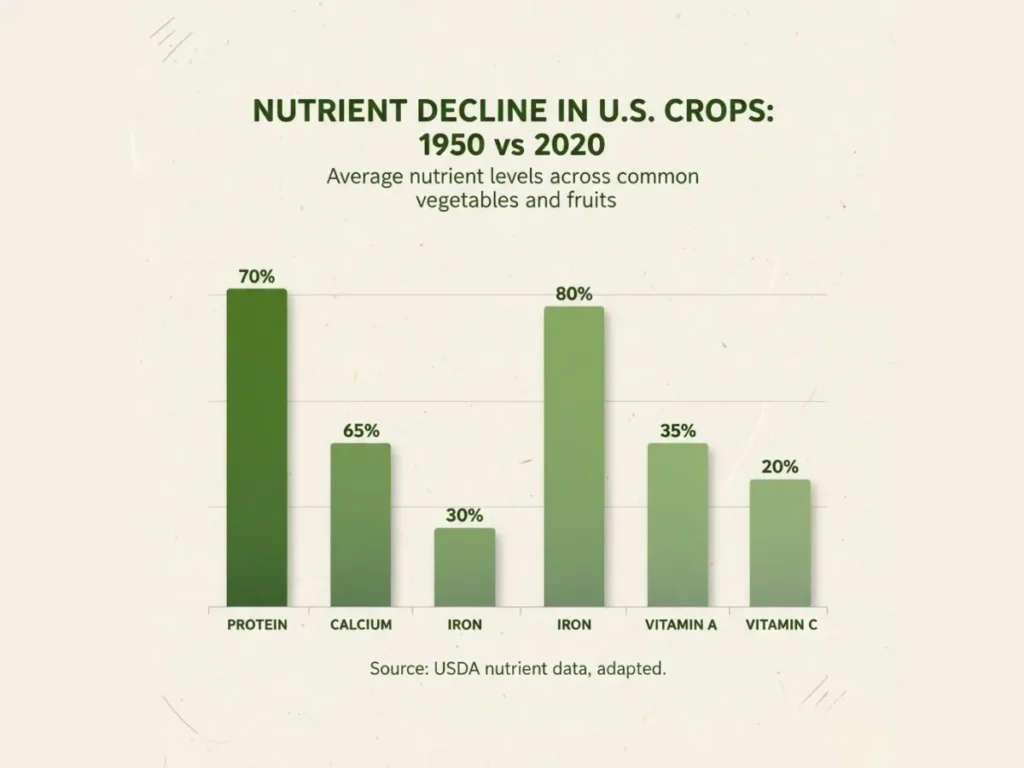
Studies from the U.S. Department of Agriculture (USDA) reveal a striking trend: between 1950 and 2020, the nutrient density of vegetables declined by 15% to 40% in key vitamins and minerals.
- Spinach has lost over 50% of its iron content.
- Wheat today contains far less protein and zinc than it did in the 1960s.
- Modern tomatoes often have half the vitamin C of older varieties.
The root cause? Soil depletion — the gradual loss of organic matter, minerals, and microbial diversity due to intensive monocropping and chemical fertilizers.
How Soil Health Shapes Human Health
Healthy soil functions much like a healthy gut. It’s filled with microbes, fungi, and organic matter that cycle nutrients into forms plants can absorb.
When soil loses this living structure, crops grow faster but less nutritionally dense — meaning we eat the same calories, but get fewer vitamins, minerals, and antioxidants.
Dr. David Montgomery, geologist and author of “What Your Food Ate”, explains:
“Soil health directly affects the health of the crops, livestock, and people that depend on it. Restoring soil biology restores food nutrition.”
What Is Regenerative Agriculture — and How It Differs from Organic
While organic farming avoids synthetic fertilizers and pesticides, regenerative agriculture goes further — it rebuilds soil health through natural ecosystem cycles.
Core regenerative practices in the U.S. include:
- Cover cropping to protect soil between harvests.
- Crop rotation to diversify root systems and replenish minerals.
- Reduced tillage to protect soil structure.
- Managed grazing with livestock to recycle nutrients naturally.
These methods increase soil carbon storage, water retention, and biodiversity, creating food that’s not only sustainable but nutritionally superior.
Scientific Evidence: Soil Microbes, Minerals & Vitamin Levels
Several U.S.-based studies now confirm what many farmers have observed anecdotally:
| Study | Key Finding | Source |
|---|---|---|
| 2022 Rodale Institute Study | Regeneratively grown wheat had 30% more antioxidants than conventionally grown wheat. | Rodale Institute, Pennsylvania |
| 2021 UC Davis Soil Study | Improved microbial activity increased calcium and magnesium uptake in vegetables. | University of California, Davis |
| 2020 USDA Pilot Farms | Pasture-raised beef on regenerative farms showed 2-3x higher omega-3 content. | USDA Agricultural Research Service |
Foods Proven to Be More Nutrient-Dense When Regeneratively Grown
The following U.S. foods consistently show higher nutrient density under regenerative systems:
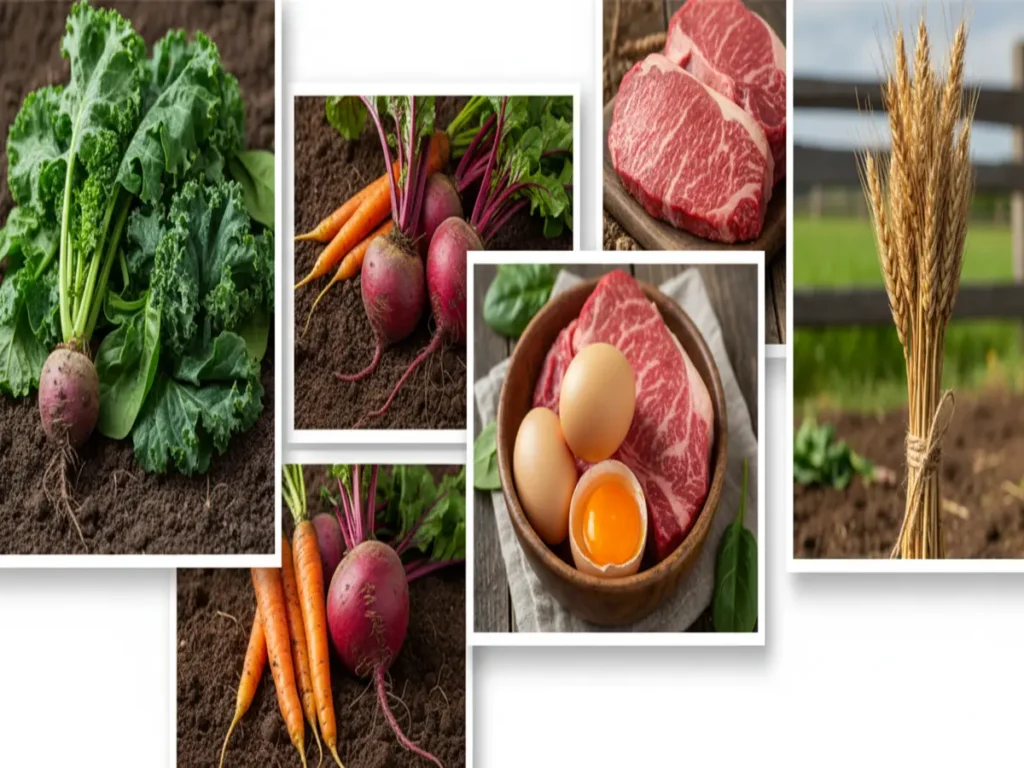
- Leafy Greens (Spinach, Kale): Up to 50% more magnesium and potassium.
- Root Vegetables (Carrots, Beets): Greater beta-carotene and polyphenol levels.
- Grass-Fed Beef: Higher omega-3s, conjugated linoleic acid (CLA), and vitamin E.
- Eggs from Regenerative Farms: Richer yolk color and 3x more vitamin D.
- Whole Grains (Oats, Wheat): Improved zinc, iron, and antioxidant profile.
How Americans Can Support Regenerative Brands & Farmers
Consumers play a vital role in accelerating the regenerative movement. Here’s how U.S. buyers can make informed choices:
- Look for “Regeneratively Grown” or “Land to Market” certifications.
- Buy from farmers’ markets that mention soil health or cover cropping.
- Support U.S. brands like Force of Nature Meats, White Oak Pastures, and Rodale Institute Farms.
- Reduce food waste — it lessens pressure on intensive production systems.
- Advocate for regenerative policies at the local and national level.
Actionable Checklist: Eating for Soil & Health
✅ Choose regeneratively sourced produce whenever available.
✅ Prioritize grass-fed, pasture-raised animal products.
✅ Rotate your own food intake — variety mimics soil biodiversity.
✅ Compost at home to return nutrients back to the earth.
✅ Follow organizations like Kiss the Ground and Soil Health Institute for guidance.
Expert Insights
Dr. Elaine Ingham, Soil Microbiologist:
“The solution to human health is under our feet. Every teaspoon of healthy soil contains more organisms than people on Earth.”
Gabe Brown, U.S. Regenerative Farmer:
“We can’t have healthy people without healthy soil — and the way we farm today decides both.”
Authoritative Resources
- Rodale Institute – Regenerative Agriculture Research
- USDA Soil Health Division
- Kiss the Ground Foundation
- Soil Health Institute
Other Interesting Article
FAQ Section
1. What is the main goal of regenerative agriculture?
To rebuild soil health, biodiversity, and water cycles — creating food systems that restore rather than deplete the land.
2. Are regenerative foods more expensive in the U.S.?
Currently, yes — but prices are dropping as more farms transition and demand grows.
3. Can regenerative farming really impact human nutrition?
Yes. Studies show higher vitamin, mineral, and antioxidant levels in regeneratively grown foods compared to conventionally grown counterparts.
4. How can consumers identify authentic regenerative products?
Look for third-party labels like Regenerative Organic Certified or check brand transparency on sourcing practices.
5. What’s the difference between regenerative and sustainable farming?
Sustainability maintains; regeneration improves. Regenerative agriculture rebuilds ecosystems, not just preserves them.
Conclusion
Regenerative agriculture represents a return to nature’s blueprint — farming that restores the land while revitalizing the nutrients in our food. For Americans seeking real wellness, the path forward isn’t found in supplements alone but in supporting the soil that feeds us.
When we nourish the ground, it nourishes us back.