
For years, people obsessed over how much protein to eat. But in 2025, nutrition science has shifted — when you eat protein is proving just as important as how much you eat.
Your body doesn’t use protein in one big lump; it relies on steady amino acid availability throughout the day to repair muscle, maintain metabolism, and regulate hormones.
Whether your goal is fat loss, muscle gain, or healthy aging, understanding protein distribution timing could redefine your results.
The Science Behind Protein Distribution
Protein supports everything — from enzyme production to neurotransmitter balance. But here’s the problem: most Americans eat 70–80% of their protein at dinner, leaving morning and afternoon meals underpowered.
This uneven intake pattern creates a long gap of low amino acid availability, limiting muscle protein synthesis (MPS) — your body’s process of rebuilding lean tissue.
🧬 Muscle Protein Synthesis (MPS):
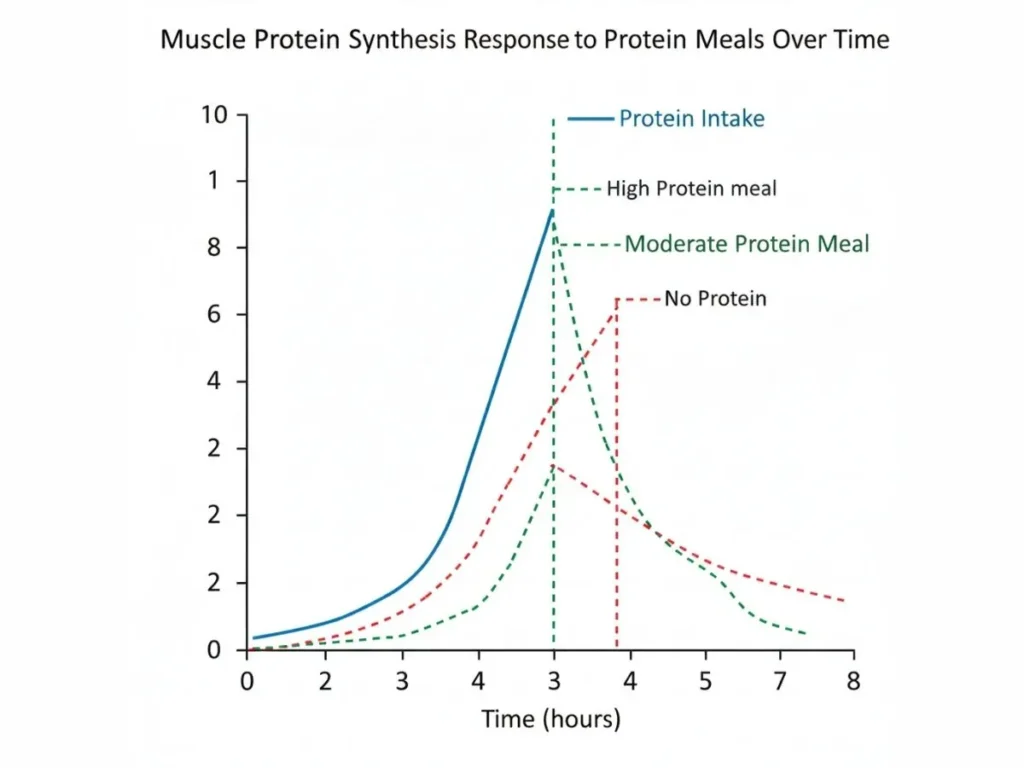
When you eat high-quality protein, amino acids (especially leucine) trigger MPS. But the signal only lasts 3–5 hours. If you don’t re-stimulate it through another protein-rich meal, muscle repair slows down.
Why Timing Matters More Than Total Intake
A 2024 meta-analysis from the Journal of Nutrition and Metabolism found that distributing protein evenly across 3–4 meals led to 25% higher muscle synthesis rates compared to the same total protein eaten mostly at dinner.
This means 30 grams of protein four times daily is more effective than 120 grams once daily — even though the total protein is identical.
| Meal Timing | Typical American Diet | Optimized Protein Timing |
|---|---|---|
| Breakfast | 10g | 30g |
| Lunch | 15g | 30g |
| Dinner | 80g | 30g |
| Snack (optional) | <10g | 20–25g (before bed) |
The “Leucine Threshold” Principle
Each meal should contain enough leucine (around 2.5–3g) to trigger MPS effectively. This typically means consuming 25–35g of high-quality protein per meal from:
- Lean meat or poultry
- Eggs and dairy
- Whey or plant-based protein powder
- Legumes and soy-based foods
Failing to reach this threshold means your meal doesn’t fully activate muscle-building processes — no matter how much total protein you eat daily.
Benefits of Optimized Protein Distribution
1. Improved Muscle Growth and Repair
Consistent MPS activation promotes steady lean mass development, especially important for people over 30 when anabolic resistance begins.
2. Better Satiety and Appetite Control
Protein-rich meals throughout the day stabilize ghrelin (hunger hormone) and reduce evening cravings.
3. Enhanced Metabolic Health
Even distribution maintains thermogenesis and blood sugar control — improving fat loss outcomes.
4. Stronger Recovery for Active Individuals
Athletes and fitness enthusiasts recover faster when protein intake is spread evenly post-exercise.
5. Age-Related Muscle Preservation
Older adults experience greater protection against sarcopenia (age-related muscle loss) when protein timing is consistent.
How to Optimize Protein Distribution (Action Plan)
Step 1: Start the Day Strong
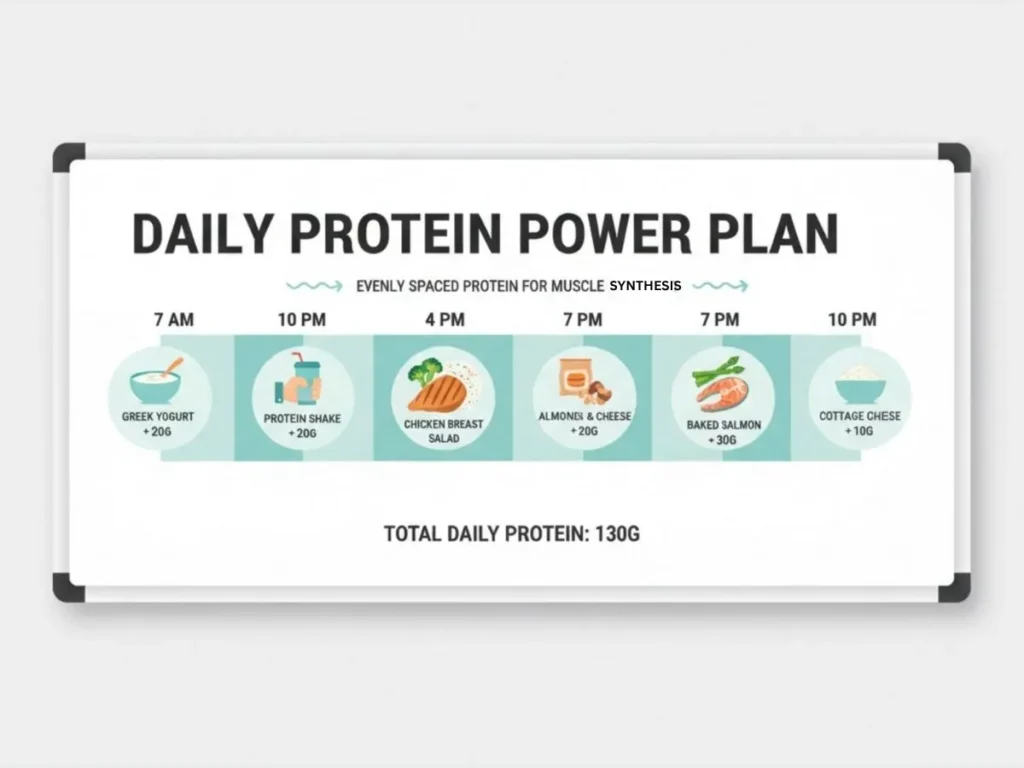
Kick off breakfast with at least 30g of protein — e.g., Greek yogurt with whey, or eggs with turkey bacon.
This prevents the morning “catabolic” phase and starts MPS early.
Step 2: Plan Protein-Centric Meals
Each meal should revolve around a protein anchor, not carbs or fat. Build meals around chicken, lentils, or tofu, then add carbs/fats second.
Step 3: Use Post-Workout Protein Strategically
Consume 20–40g within 1 hour after exercise to maximize recovery and glycogen resynthesis.
Step 4: Add a Night time Protein Snack
A slow-digesting protein (like casein) before bed enhances overnight recovery and muscle retention — especially in older adults.
Step 5: Track and Adjust
Apps like Cronometer or MyFitnessPal help monitor both total intake and meal distribution. Aim for 0.7–1.0g per pound of body weight daily, spaced across 3–5 meals.
Expert Insight
“It’s not just about hitting your protein goal — it’s about hitting it smartly. Every meal is an opportunity to build or break down muscle.”
— Dr. Donald Layman, Protein Metabolism Expert, University of Illinois
Authoritative Resources
- National Institutes of Health – Protein and Muscle Health
- International Society of Sports Nutrition – Position Stand on Protein Timing
- Harvard Health – Protein and Aging
Other Interesting Article
FAQ: Protein Distribution Timing
Q1. Can I still gain muscle if I only eat protein twice a day?
You can, but you’ll build muscle more slowly. Consistent MPS stimulation requires multiple daily protein feedings.
Q2. Does intermittent fasting ruin protein distribution?
Not necessarily. You can still hit 3 protein-rich meals during your eating window — the key is spacing them properly.
Q3. What if I don’t eat animal products?
Combine plant proteins (like rice + beans or pea + soy) to reach the leucine threshold per meal.
Q4. How much protein should I eat before bed?
20–25g of casein or Greek yogurt supports overnight muscle recovery.
Q5. Is too much protein harmful for kidneys?
For healthy adults, research shows no kidney damage from moderate-to-high protein diets up to 2g/kg body weight.
Actionable Checklist: Your Protein Timing Blueprint
| Goal | Strategy | Example |
|---|---|---|
| Kickstart MPS Early | 30g protein breakfast | 3 eggs + Greek yogurt |
| Maintain Energy Midday | 30g lunch protein | Chicken bowl or tofu stir-fry |
| Support Recovery | Post-workout protein | Whey shake + banana |
| Overnight Recovery | Casein-rich bedtime snack | Cottage cheese or micellar casein |
Conclusion
Optimizing protein distribution timing is one of the simplest but most overlooked performance upgrades you can make.
Whether you’re building muscle, losing fat, or fighting age-related decline, spacing your protein intake evenly throughout the day turns every meal into a metabolic advantage.
It’s not just about how much protein you eat — it’s about how intelligently you time it.