
Introduction
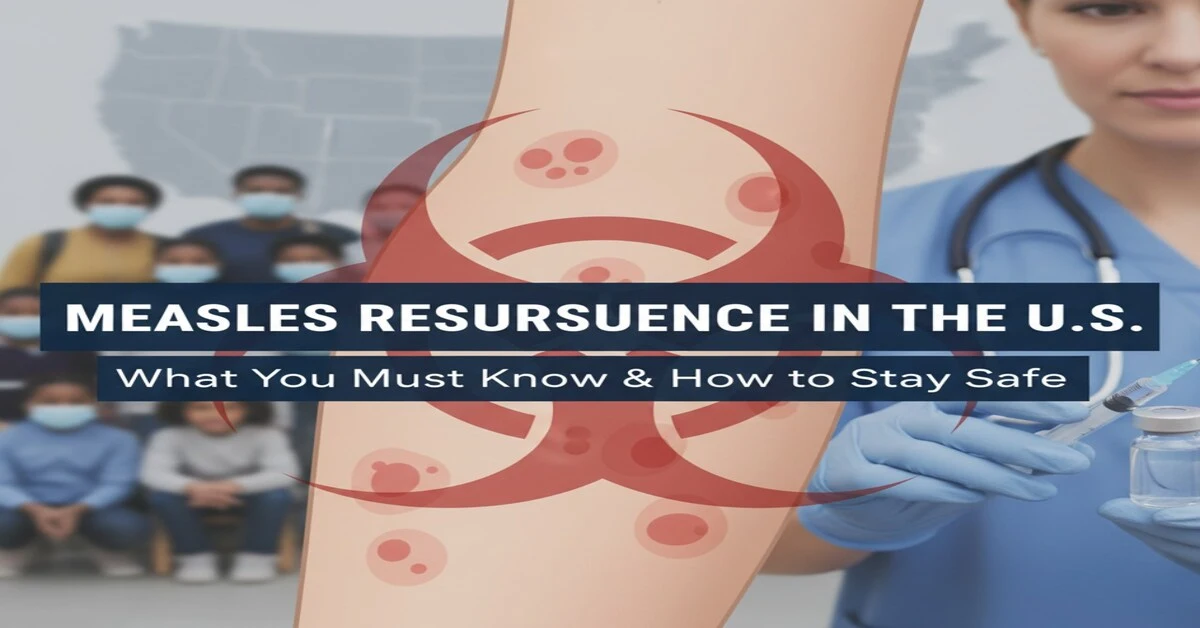
Measles was once considered nearly eradicated in the United States—but in 2025, it has made a dramatic comeback. With over 1,500 confirmed cases already recorded across 42 jurisdictions, health officials are sounding alarms.
This resurgence is fueled by declining vaccination rates, global travel, and pockets of vaccine hesitancy. As measles becomes a trending topic again, it’s essential for families, schools, and communities to understand how it spreads, how to prevent it, and what steps to take if exposure happens.
In this article, you’ll receive expert-backed insights and practical strategies to stay safe in 2025.
Why Measles Is Trending Again in the USA
- 2025 has already seen the worst measles numbers in over 30 years in the U.S.
- The Americas may lose “measles-free” status if outbreaks aren’t contained.
- Health agencies are exploring changing vaccine strategies; e.g., the U.S. CDC has proposed separation of the combined MMR vaccine into individual shots—controversial due to logistical and scientific concerns.
What Is Measles? (Causes & Transmission)
Measles (also called rubeola) is a highly contagious viral disease. The virus spreads via respiratory droplets (coughing, sneezing) and can remain airborne for up to two hours in a space after an infected person leaves.
Key points:
- After exposure, it often takes 10–14 days before symptoms appear, according to WHO.
- A person with measles can spread the virus from about 4 days before to 4 days after rash onset.
- Because of its high transmissibility, achieving ~95% vaccination coverage is needed to prevent outbreaks.
Signs, Symptoms & Timeline
Measles begins like a bad cold before progressing to more distinct signs:
| Stage | Symptoms | Notes |
|---|---|---|
| Prodromal Phase (Days 1–3) | Fever, cough, runny nose (coryza), red watery eyes (conjunctivitis) | Highly infectious during this period |
| Koplik’s Spots (Days 2–4) | Small, white spots inside the mouth | A telltale sign, sometimes before rash |
| Rash Phase (Days 3–7 after initial symptoms) | Flat red spots beginning on face, then spreading down body | Rash may join together in places |
| Later Phase | Fever may spike above 104°F, symptoms persist for ~5–7 days | Risk of complications arises |
Because symptoms overlap with other illnesses initially, lab confirmation is essential.
Complications & High-Risk Groups
While many recover uneventfully, measles can cause serious complications:
- Ear infections, diarrhea — common in children.
- Pneumonia — leading cause of measles-related death.
- Encephalitis (brain inflammation) — rare but life-threatening.
- Subacute Sclerosing Panencephalitis (SSPE) — a rare delayed complication in children. (Long-term)
- Risks in infants, pregnant women, immunocompromised persons — much higher severity and risk.
Because of these risks, prevention is paramount.
Prevention: Vaccines, Immunity & Public Health
The MMR vaccine (measles, mumps, rubella) is the cornerstone of measles prevention. Two doses provide ~97% protection, while one dose gives ~93%.
Key points:
- MMR is safe and effective.
- During outbreaks, health departments may advance second doses or vaccinate infants earlier in some cases.
- As per CDC guidance, measles cases should be isolated under airborne precautions for 4 days after rash onset.
- The U.S. remains vulnerable because many outbreaks stem from imported cases in unvaccinated individuals.
Public health systems use vaccination campaigns and outbreak response to contain spread.
What to Do If Exposed or Infected
If Exposed (but not symptomatic):
- Check your vaccination status — if unvaccinated or only one dose, talk to a physician about receiving MMR (post-exposure prophylaxis).
- Quarantine — monitor for symptoms for ~21 days (incubation period).
- Avoid contact with vulnerable individuals (infants, immunocompromised).
If Infected:
- Isolate yourself (airborne precautions) for 4 days after rash onset.
- Seek medical care for complications (especially respiratory or neurological).
- Supportive care is primary — there is no specific antiviral for measles.
- Some protocols include vitamin A supplementation in children to reduce severity.
Early detection and medical monitoring are critical.
Myths & Misinformation
| Myth | Truth |
|---|---|
| “Measles is just a rash + fever, mild disease.” | Not true. It can lead to serious complications, especially in vulnerable populations. |
| “Vaccines cause more harm than benefit.” | Extensive evidence shows MMR is safe and highly effective. |
| “Once vaccinated, I don’t need to worry again.” | Rare vaccine failures occur; herd immunity and boosters are critical. |
| “Only children get measles.” | Adults can contract it, especially if unvaccinated or immunity has waned. |
Tips for Families & Communities
- Ensure your children and yourself are up to date on both doses of MMR.
- Check local health department notices for outbreaks.
- Keep public spaces well-ventilated and discourage attendance by symptomatic individuals.
- Promote vaccine education and fight misinformation.
- Support policies to restore “measles-free” status in the Americas.
FAQ
Q1: Can I get measles even if I’m vaccinated?
Yes, though it’s rare — breakthrough cases exist, particularly in those with one dose only.
Q2: Is measles dangerous for adults?
Yes, complications can be more severe in adults, particularly for lung or brain infection.
Q3: When is someone contagious?
From ~4 days before rash onset until 4 days after the rash appears.
Q4: What’s MMR vs MMRV vaccine?
MMR covers measles, mumps, rubella. MMRV also includes varicella (chickenpox). Choice depends on local guidelines.
Actionable Checklist
- Confirm you and family have two doses of MMR
- Monitor vaccine coverage in your area
- Avoid close contact if someone has symptoms
- Report suspected measles cases to local health authority
- Stay updated with public health alerts
Authoritative Resources
- CDC — Measles / Signs & Symptoms / Preventing Measles
- WHO — Measles outbreak alerts
- Mayo Clinic — Measles Symptoms & Prevention
- National Foundation for Infectious Diseases (NFID) — Measles information
Conclusion & Next Steps
The resurgence of measles is a reminder that no disease is gone forever if vigilance lapses. In 2025, the U.S. faces one of its worst measles years in decades, driven largely by gaps in vaccination.
Your best protection? Vaccination, awareness, and readiness. Make sure your family, school, and community are informed and protected. Measles can be kept at bay—and with your steps today, you help build stronger, healthier defenses for everyone.