

For decades, athletes and weekend warriors alike blamed lactic acid for burning muscles and post-workout fatigue. But new research has completely rewritten that story — and it’s time to clear lactic acid’s name.
Far from being a waste product, lactic acid is a powerful metabolic ally, helping the body recycle energy, balance pH, and even boost endurance performance when managed properly.
What Is Lactic Acid, Really?
Lactic acid (or lactate, its usable form) is produced when the body breaks down glucose for energy without enough oxygen present — a process known as anaerobic glycolysis.
It’s not a sign of failure. In fact, lactate acts as a backup fuel system, kicking in during high-intensity exercise to keep your muscles moving when oxygen delivery can’t keep up.
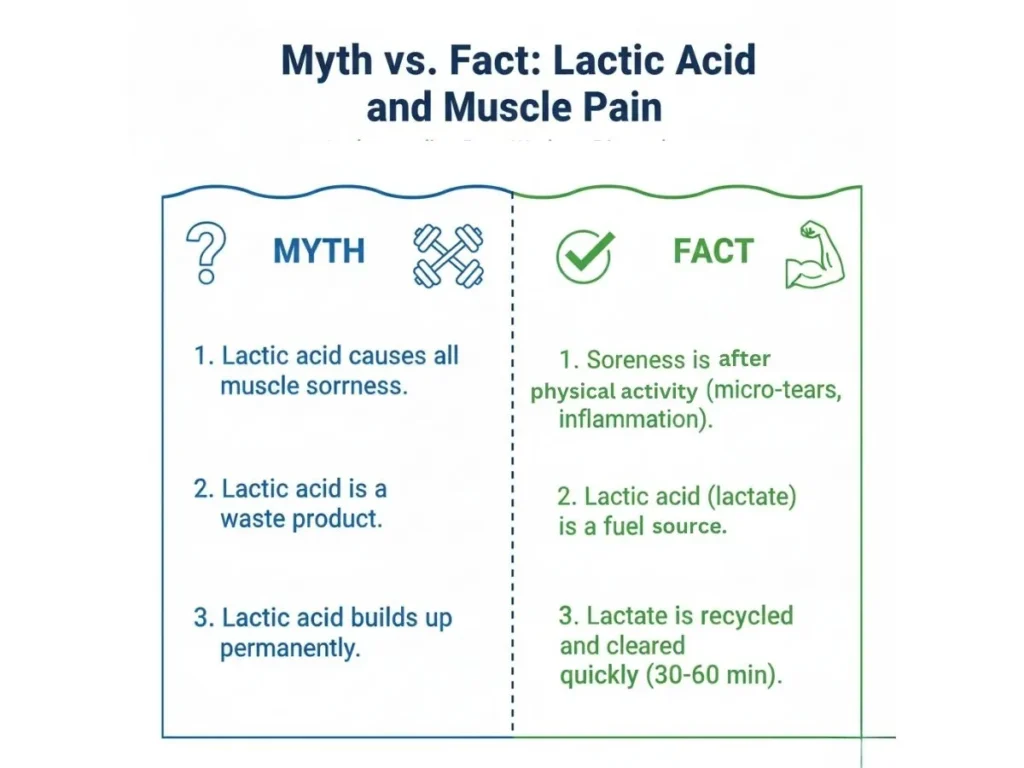
The Myth: Lactic Acid Causes Muscle Soreness
Contrary to gym folklore, lactic acid does not cause muscle soreness.
That delayed soreness you feel 24–48 hours post-exercise is due to microtears and inflammation, not acid buildup.
Science Check:
Lactic acid is cleared from the muscles within 30–60 minutes after exercise — long before soreness peaks.
Lactate: The Metabolic Bridge Between Muscles and Brain
Lactate is not just a byproduct — it’s a signaling molecule and alternate energy source for multiple organs, including the heart and brain.
| System | Lactate’s Role | Benefit |
|---|---|---|
| Muscles | Provides fast fuel when oxygen is low | Delays fatigue during intense exercise |
| Heart | Preferred energy during stress | Supports cardiac efficiency |
| Brain | Crosses the blood-brain barrier | Enhances alertness and mental clarity |
| Liver | Recycles lactate into glucose (Cori Cycle) | Maintains blood sugar stability |

The Lactate Shuttle: Nature’s Recycling System
Your body is smarter than you think. When lactate is produced in one muscle cell, it can be shuttled to another where oxygen is available and converted back into energy.
This system — the Lactate Shuttle Hypothesis — revolutionized how scientists understand endurance metabolism.
Key takeaway: Lactate is not a metabolic dead-end; it’s a dynamic fuel that moves energy around the body efficiently.
How Endurance Athletes Benefit from Lactate Adaptation
Trained athletes don’t necessarily produce less lactate — they use it more efficiently.
With consistent training, the body builds more mitochondria, enabling faster lactate clearance and conversion back into energy. This adaptation increases the lactate threshold — the point where performance can be sustained longer before fatigue sets in.
| Adaptation | Effect on Performance |
|---|---|
| Increased Mitochondria | More lactate-to-energy conversion |
| Higher Lactate Threshold | Delayed fatigue, improved endurance |
| Enhanced Oxygen Utilization | Greater aerobic efficiency |
| Improved Recovery | Faster clearance post-exercise |
How to Train Your Lactate System Naturally
- Zone 2 Cardio (Mitochondrial Training)
Slow, steady workouts (heart rate 60–70% max) teach your body to burn fat and clear lactate efficiently. - High-Intensity Intervals (HIIT)
Short bursts (20–60 sec) push your lactate system and improve tolerance. - Active Recovery Sessions
Light activity post-workout enhances lactate recycling and reduces fatigue. - Nutritional Support
- B-Vitamins & Magnesium: Optimize energy metabolism
- Electrolytes: Balance pH during endurance efforts
- Antioxidants: Neutralize free radicals created during lactate metabolism

Expert Quote
“Lactate isn’t the enemy of performance — it’s one of the body’s most intelligent energy management tools. Training your lactate threshold is key to metabolic resilience.”
— Dr. Andrew Huberman, PhD, Neurobiology Researcher, Stanford University
Lifestyle Factors That Influence Lactate Efficiency
| Factor | Impact on Lactate Use | Recommendation |
|---|---|---|
| Sleep Quality | Poor sleep raises baseline lactate | Maintain 7–9 hours nightly |
| Hydration | Dehydration slows lactate clearance | Drink electrolytes, not plain water |
| Diet Composition | Low-carb diets reduce lactate fuel availability | Include slow-digesting carbs for endurance |
| Stress Levels | Chronic cortisol alters metabolism | Use breathwork or meditation post-training |
Authoritative Resources
- National Institutes of Health: Lactate Metabolism Studies
- American Journal of Physiology: The Lactate Shuttle Concept
Other Interesting Article
FAQs: Lactic Acid and Performance
Q1. Why do muscles burn during intense exercise?
That burning sensation is due to hydrogen ion accumulation — not lactic acid itself. Lactate helps buffer those ions.
Q2. How can I increase my lactate threshold?
Incorporate consistent Zone 2 cardio and short HIIT intervals two to three times per week.
Q3. Does lactic acid cause fatigue?
No. It’s actually a temporary energy source that allows muscles to keep functioning when oxygen is low.
Q4. What foods support lactate metabolism?
Whole grains, leafy greens, and magnesium-rich foods help enzymes that manage lactate turnover.
Q5. Can lactate improve brain performance?
Yes. Studies show lactate serves as a key fuel for the brain during stress and cognitive exertion.
Conclusion
Lactic acid isn’t the villain we once thought it was — it’s an essential metabolic partner that fuels endurance, supports brain clarity, and promotes recovery.
Understanding and training your lactate system helps transform exercise from a struggle into a metabolic symphony — where your body learns to recycle, recover, and perform at its peak.