
ntroduction
Screens dominate nearly every part of modern life. From smartphones and laptops to streaming platforms and workplace tools, Americans now spend more than 7 hours daily on digital devices. While technology provides convenience, constant connectivity has raised concerns about its effect on both mental health and physical well-being.
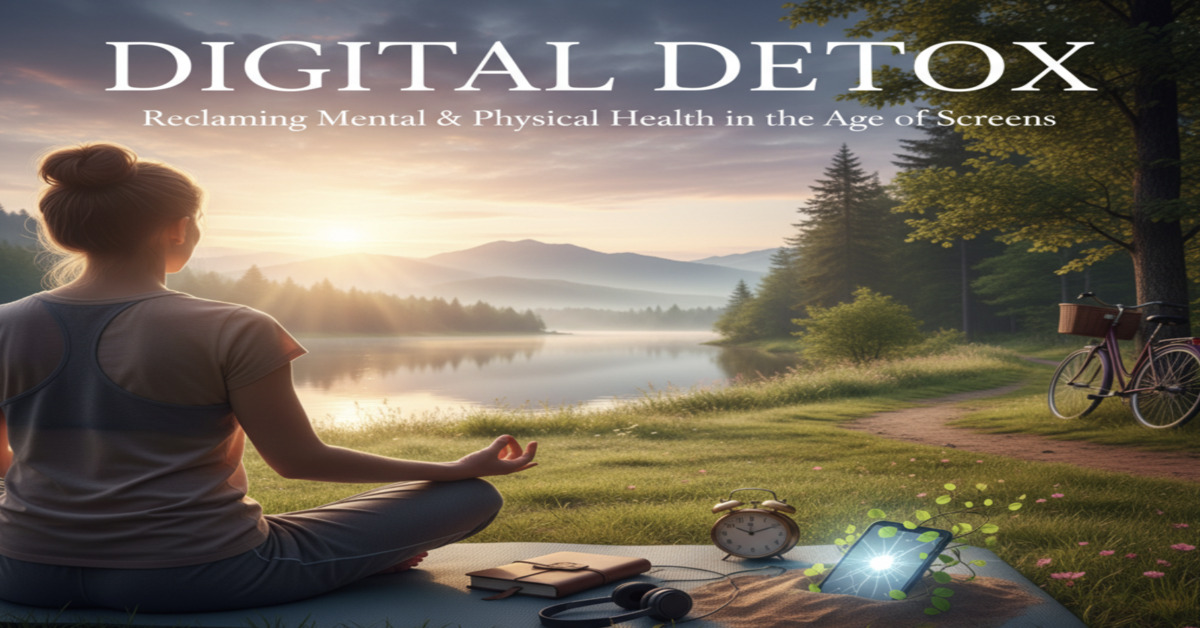
A digital detox — the intentional reduction of screen use — has emerged as a strategy to restore balance, improve focus, and protect long-term health. This guide explores why unplugging is critical in 2025, actionable ways to make it work, and how Americans can reclaim control in a screen-driven society.

The Rising Need for a Digital Detox
Screen Time by the Numbers
A closer look at how much time Americans spend on devices:
| Activity | Average Daily Screen Time (2024) | Impact on Health |
|---|---|---|
| Social Media | 2 hrs 27 mins | Anxiety, reduced self-esteem |
| Streaming/Entertainment | 2 hrs 55 mins | Sedentary behavior, poor sleep |
| Work/Remote Tools | 3 hrs 12 mins | Eye strain, burnout |
| Gaming | 1 hr 15 mins | Sleep disruption, addictive behavior |
Source: Pew Research Center, 2024
This data shows that screen exposure is no longer limited to work; it dominates leisure time as well.
Mental Health Impact of Constant Screen Use
Anxiety and Information Overload
The endless flow of notifications, emails, and news alerts keeps the brain in a heightened state of arousal. Research links excessive screen exposure to higher levels of stress and anxiety.
Expert Insight: Dr. Jean Twenge, psychologist and author, notes:
“Teens and adults alike report greater anxiety and loneliness with increased screen use, particularly when it replaces in-person interaction.”
Sleep Disruption
Blue light from screens suppresses melatonin production, making it harder to fall asleep. Nighttime scrolling has been strongly associated with insomnia and fatigue.
Attention Fragmentation
Constant switching between apps and tabs reduces focus. Over time, this weakens the brain’s ability to sustain attention on longer tasks.
Physical Health Effects of Screen Overuse
Eye Strain and Headaches
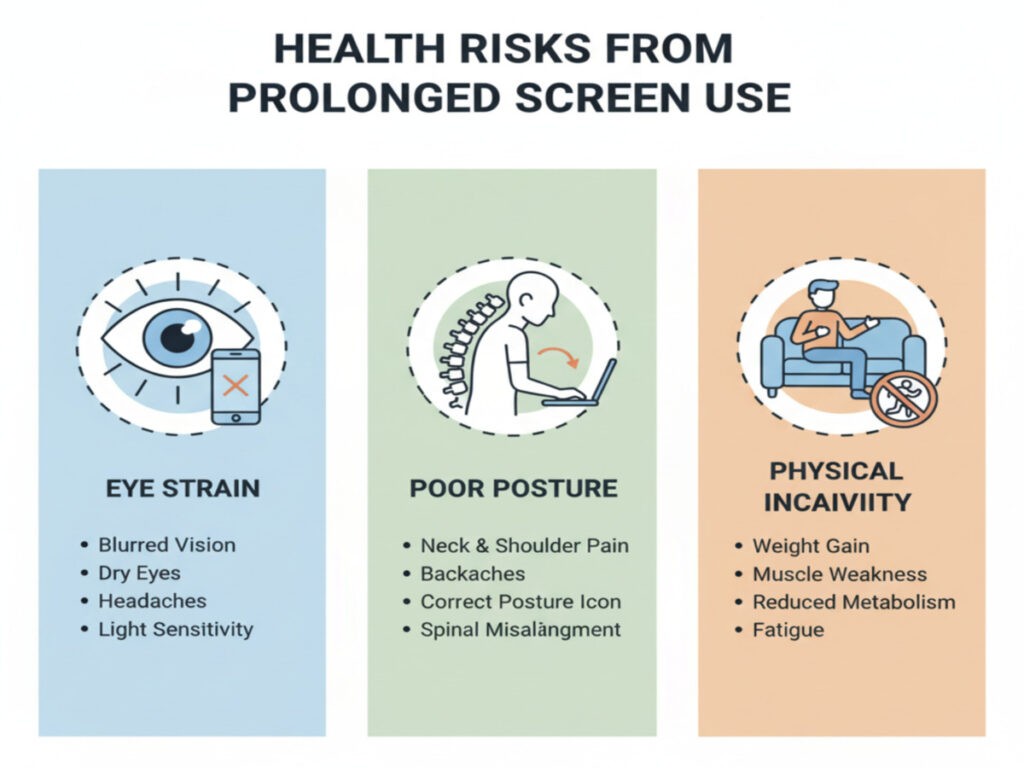
Staring at digital devices for long periods causes digital eye strain — blurred vision, headaches, and even migraines.
Posture and Musculoskeletal Issues
Poor ergonomics, particularly when using phones or laptops, contributes to neck and back pain, sometimes called “tech neck.”
Sedentary Lifestyle
Screen time reduces opportunities for movement, contributing to obesity, cardiovascular risks, and metabolic dysfunction.
What Is a Digital Detox?
A digital detox is not about eliminating technology but creating intentional breaks to restore balance. It may involve:
- Avoiding non-essential phone use during meals
- Scheduling daily “screen-free” blocks
- Turning off notifications
- Taking weekends or vacations with minimal digital use
Practical Digital Detox Strategies for Americans
1. Micro-Detoxes During the Day
Short breaks — like 15 minutes every 2 hours without devices — can reset focus and reduce eye strain.
2. Device-Free Bedrooms
Removing screens from the bedroom improves sleep quality and promotes relaxation.
3. Social Media Boundaries
Setting daily time limits or using apps that block feeds helps prevent endless scrolling.
4. Tech-Free Meals
Encourage mindful eating and real connection by banning phones at the table.
5. Weekend Unplugging
A partial or full weekend detox can refresh mental energy and strengthen family bonds.

Digital Detox for Workplaces
Companies are beginning to see the value of structured digital detox policies. These include:
- Encouraging walking meetings
- “No-email after hours” rules
- Dedicated device-free collaboration zones
This not only supports employee well-being but also boosts productivity.
Checklist: How to Start Your Digital Detox
✅ Track daily screen time using phone settings
✅ Decide on one area (sleep, meals, weekends) to unplug first
✅ Replace screen time with physical activities (walking, cooking, reading)
✅ Inform friends/family to set expectations
✅ Celebrate small wins — progress, not perfection
Key U.S. Statistics
- 77% of U.S. adults say they feel distracted by their phones even when spending time with loved ones. (Pew Research, 2024)
- 61% of Americans report trying at least one form of digital detox in the past year.
- Americans who take regular detox breaks report 15–20% better sleep quality and improved focus.
Frequently Asked Questions (FAQ)
Q1: How long should a digital detox last?
It varies — from short breaks during the day to full weekends offline. Consistency matters more than duration.
Q2: Is reducing screen time bad for productivity?
No. Studies show that breaks from screens boost cognitive performance and prevent burnout.
Q3: Can I still use technology for work during a detox?
Yes, the goal is to limit non-essential use, not block necessary work functions.
Q4: Are digital detox retreats worth it?
They can help jumpstart habits, but everyday small changes are more sustainable.
Authoritative Resources
Conclusion: Finding Balance in the Digital Age
Screens are here to stay, but their impact doesn’t have to define our well-being. A digital detox allows Americans to reclaim time, improve mental clarity, and strengthen relationships. By making intentional choices, we can thrive in a digital world without being consumed by it.
beautifully described 👍🏻