

ntroduction: Understanding Blood Sugar Cycling
Blood sugar cycling is an emerging nutritional strategy designed to intentionally modulate glucose levels throughout the day to optimize energy, metabolic flexibility, and long-term health. Unlike traditional diets that focus solely on low-carb or calorie restriction, blood sugar cycling incorporates strategic variations in carbohydrate intake and timing to maximize physiological benefits.
In the United States, nearly 1 in 3 adults have prediabetes, and average blood sugar spikes often go unnoticed. Blood sugar cycling offers a practical, science-backed method to stabilize glucose, improve insulin sensitivity, and support weight and energy management.
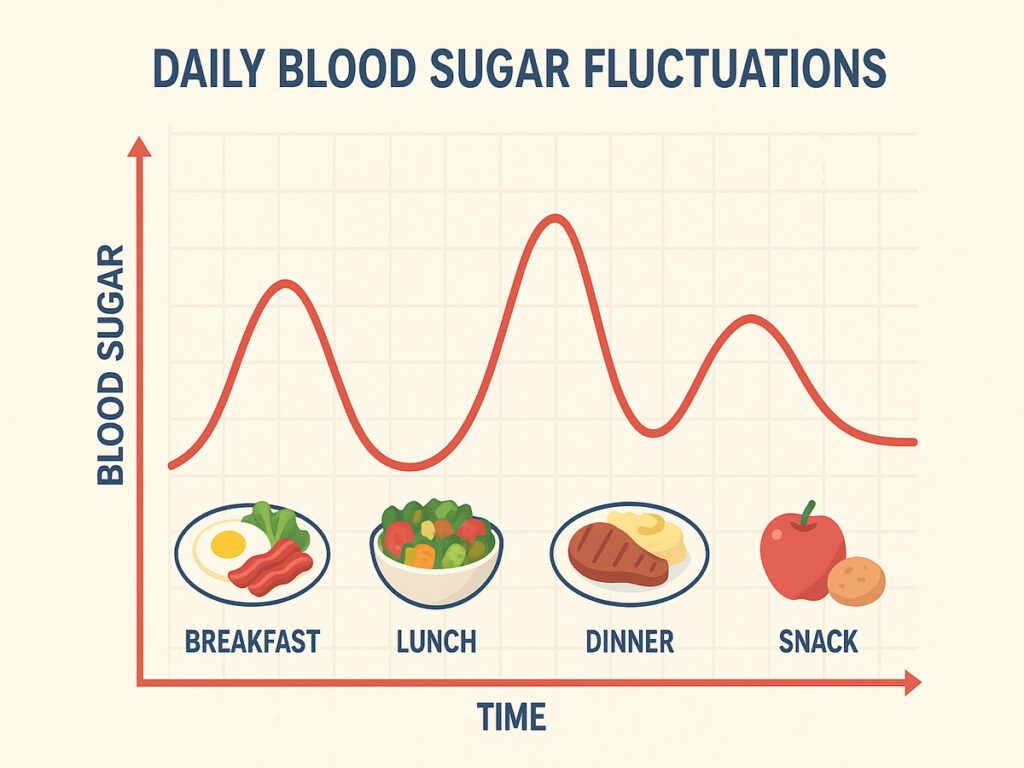
The Science Behind Blood Sugar Regulation
Blood glucose is the primary energy source for our body and brain. Regulating blood sugar is crucial for:
- Maintaining cognitive focus
- Preventing energy crashes
- Reducing long-term metabolic disease risk
Key physiological processes:
- Insulin Response: After carbohydrate intake, insulin helps shuttle glucose into cells for energy.
- Glucagon Activity: During fasting or low-carb periods, glucagon releases stored glucose to maintain energy.
- Glycemic Variability: Frequent spikes and dips in blood sugar can increase inflammation, oxidative stress, and diabetes risk.
📊 Statistic: Research from the American Diabetes Association indicates that adults who stabilize blood sugar spikes have a 30% lower risk of developing type 2 diabetes over 5 years.
Benefits of Blood Sugar Cycling
Energy Balance & Sustained Performance
By timing carbohydrate intake with activity and recovery, blood sugar cycling:
- Reduces mid-day energy crashes
- Enhances mental focus and productivity
- Supports physical performance during workouts
Weight Management
Strategic carbohydrate cycling:
- Optimizes fat metabolism during low-carb phases
- Prevents overeating caused by blood sugar dips
- Supports long-term weight control without extreme calorie restriction
Metabolic & Cardiovascular Health
Blood sugar cycling improves:
- Insulin sensitivity
- Blood lipid profile
- Reduced risk of metabolic syndrome and type 2 diabetes
Expert Quote:
“Blood sugar cycling is a practical approach to improving metabolic flexibility and long-term health outcomes,” says Dr. Michael Stern, MD, Nutrition Researcher.
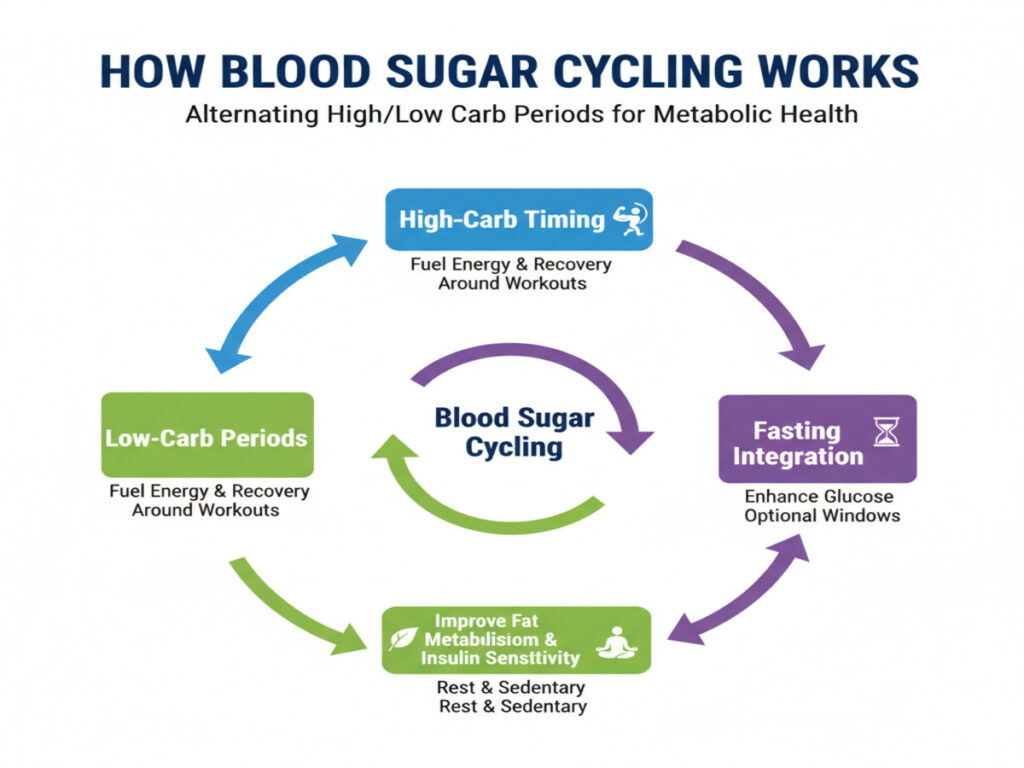
How Blood Sugar Cycling Works
Blood sugar cycling intentionally alternates between higher and lower carbohydrate periods. Core principles include:
- High-Carb Timing: Around workouts or high-demand periods to fuel energy and recovery.
- Low-Carb Periods: During rest or sedentary periods to improve fat metabolism and insulin sensitivity.
- Fasting Integration: Optional intermittent fasting windows can enhance glucose regulation.
Types & Protocols of Blood Sugar Cycling
| Protocol | Description | Recommended Users |
|---|---|---|
| Workout Carb Timing | High carbs pre/post workout, low carbs rest of day | Athletes & active adults |
| Daily Carb Cycling | Alternating high and low carb days | Weight management & metabolic flexibility |
| Intermittent Fasting + Carb Cycling | Time-restricted eating combined with high/low carb meals | Busy professionals & health enthusiasts |
| Low-Glycemic Focus | High-carb meals but only low-GI foods | Diabetics & insulin-resistant individuals |
Actionable Blood Sugar Cycling Strategies
- Track Your Meals: Use apps to monitor glucose response.
- Pair Carbs with Protein & Fiber: Slows absorption and reduces spikes.
- Prioritize Morning & Pre-Workout Carbs: Optimizes energy usage.
- Integrate Low-Carb Meals During Sedentary Periods: Supports fat metabolism.
- Use Continuous Glucose Monitors (Optional): For real-time feedback.
- Hydration & Sleep: Both influence insulin sensitivity and glucose control.
💡 Tip: Start gradually—shift 1–2 meals at a time to avoid energy crashes.
Practical Checklist for Daily Blood Sugar Management
✔ Monitor carb timing around workouts
✔ Include fiber in every meal
✔ Prioritize protein with carb intake
✔ Incorporate at least 5 servings of vegetables daily
✔ Drink 2–3 liters of water
✔ Track fasting glucose or consider CGM
✔ Sleep 7–9 hours nightly
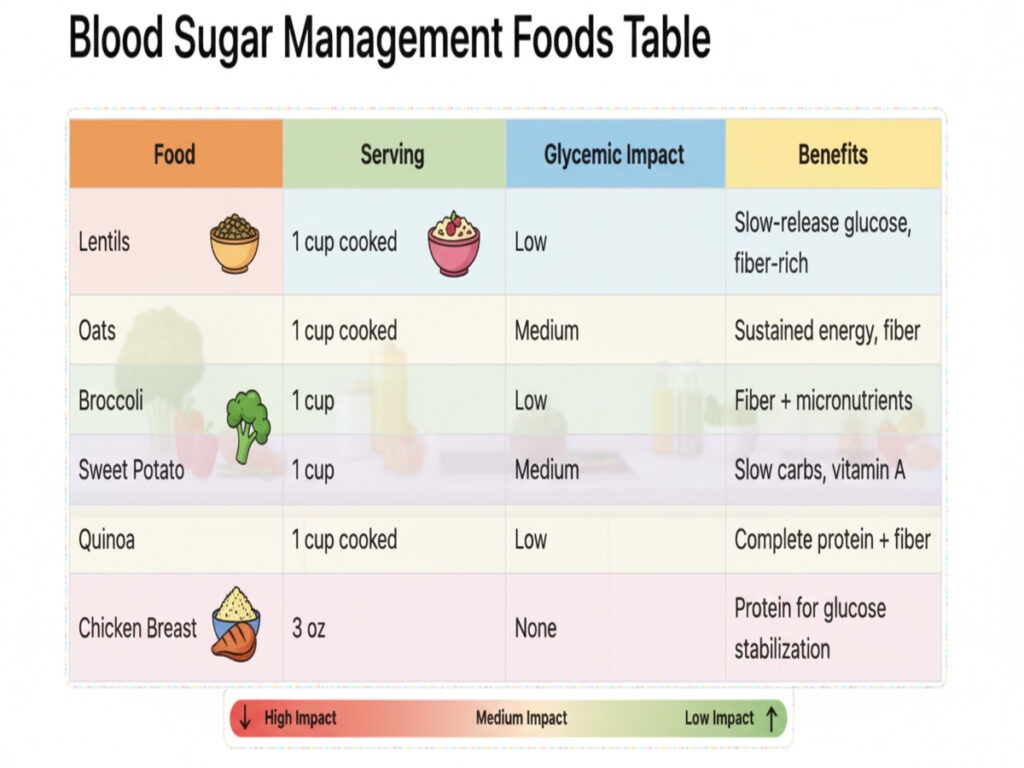
Blood Sugar Management Foods Table
| Food | Serving | Glycemic Impact | Benefits |
|---|---|---|---|
| Lentils | 1 cup cooked | Low | Slow-release glucose, fiber-rich |
| Oats | 1 cup cooked | Medium | Sustained energy, fiber |
| Broccoli | 1 cup | Low | Fiber + micronutrients |
| Sweet Potato | 1 medium | Medium | Slow carbs, vitamin A |
| Quinoa | 1 cup cooked | Low | Complete protein + fiber |
| Chicken Breast | 3 oz | None | Protein for glucose stabilization |
Expert Insights on Blood Sugar Cycling
- “Timing carbs with activity enhances energy utilization and metabolic health,” — Dr. Emily Torres, Functional Medicine Specialist.
- “Blood sugar cycling allows flexibility without extreme dieting, making adherence easier,” — Dr. Laura Michaels, RD, Gut Health Specialist.
- “CGMs are revealing how personalized blood sugar cycling can prevent chronic disease,” — Dr. Michael Stern, MD, Nutrition Researcher.
Common Myths & FAQ
Q1: Can I eat sweets if I cycle carbs?
A: Yes, within high-carb periods, but focus on whole-food carbs first.
Q2: Is blood sugar cycling safe for diabetics?
A: With medical supervision, yes. Low-GI carb strategies are preferred.
Q3: Do I need supplements?
A: Whole foods are sufficient; supplements may help if nutrient gaps exist.
Q4: Will I feel weak on low-carb periods?
A: Initially, some may feel fatigue. Gradually increase adaptation for optimal energy.
Authoritative Resources
- American Diabetes Association – Blood Sugar Management
- Harvard Health – Carb Timing and Metabolism
- Mayo Clinic – Blood Sugar Control Strategies
- NIH – Metabolic Health Research
Conclusion & Call-to-Action
Blood sugar cycling is a science-backed, flexible approach to balancing energy, managing weight, and improving metabolic health. By strategically timing carbohydrate intake, pairing carbs with protein and fiber, and tracking results, individuals can prevent blood sugar spikes, enhance energy, and reduce long-term disease risk.
👉 Next Step: Identify your high- and low-carb periods, start tracking meals, and gradually integrate carb cycling into your routine. Your energy, focus, and metabolic health will thank you.