
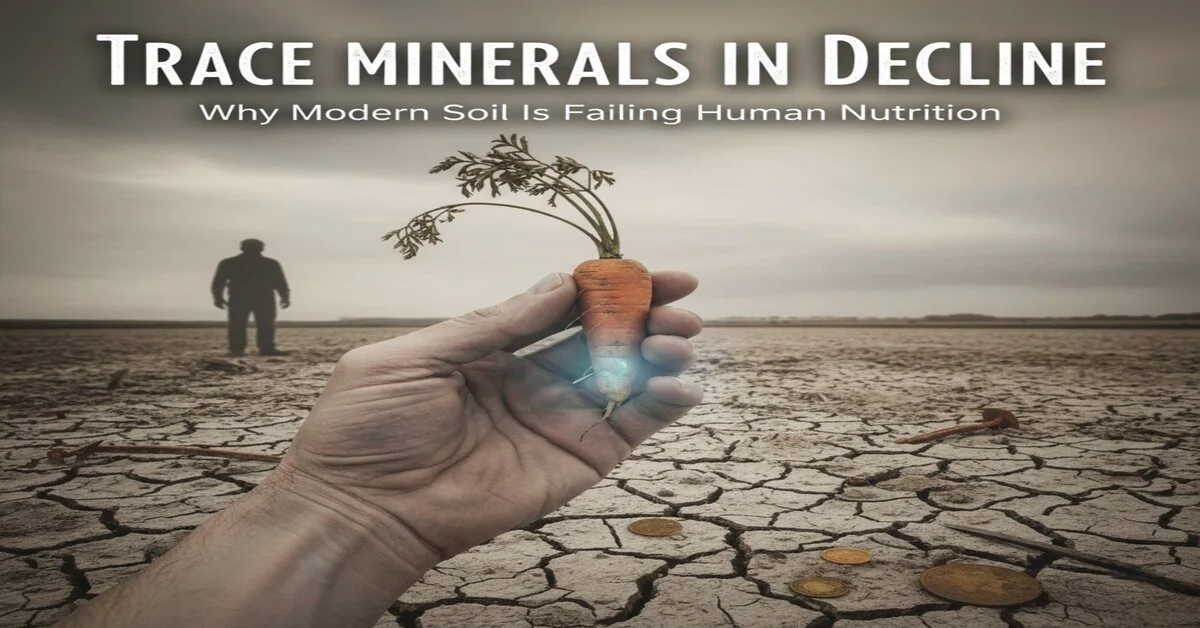
Introduction: The Hidden Nutrient Erosion
In the last 70 years, the nutrient content of our food has quietly collapsed.
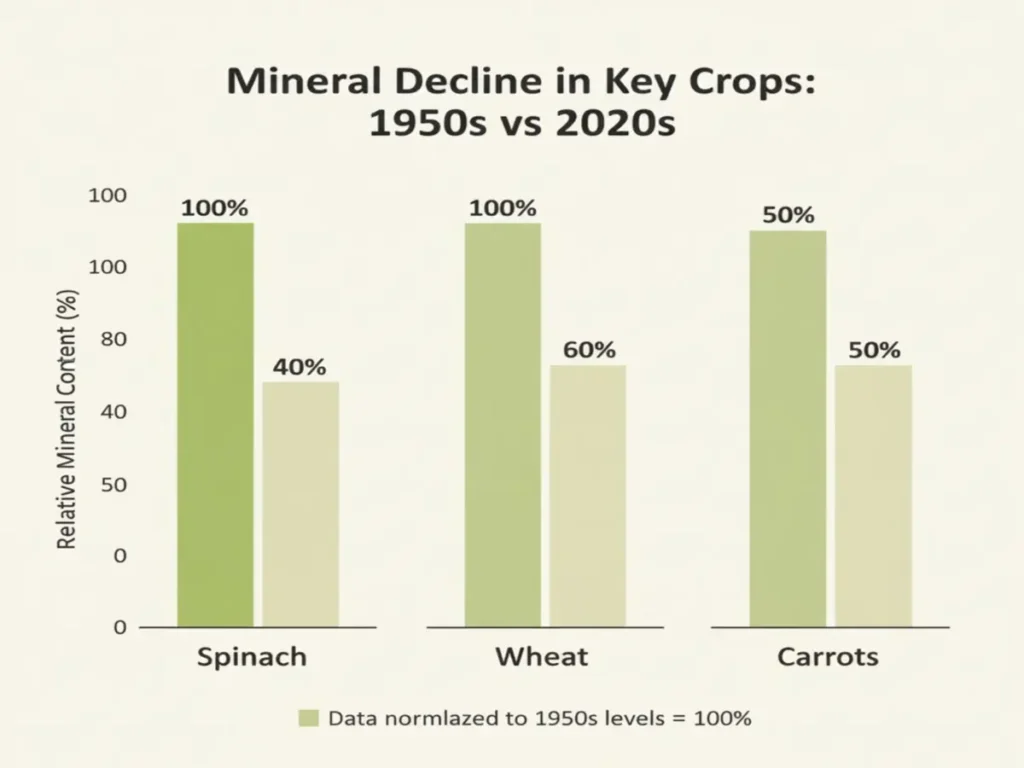
Even if you eat “healthy,” modern crops often deliver less magnesium, zinc, selenium, and iron than they did decades ago.
Why? Because our soil — the foundation of food nutrition — is running out of trace minerals. Industrial agriculture, chemical fertilizers, and continuous cropping have stripped the earth of its micronutrient wealth.
This isn’t just a farming issue. It’s a human nutrition crisis in slow motion — one directly tied to fatigue, weaker immunity, and poor metabolic resilience.
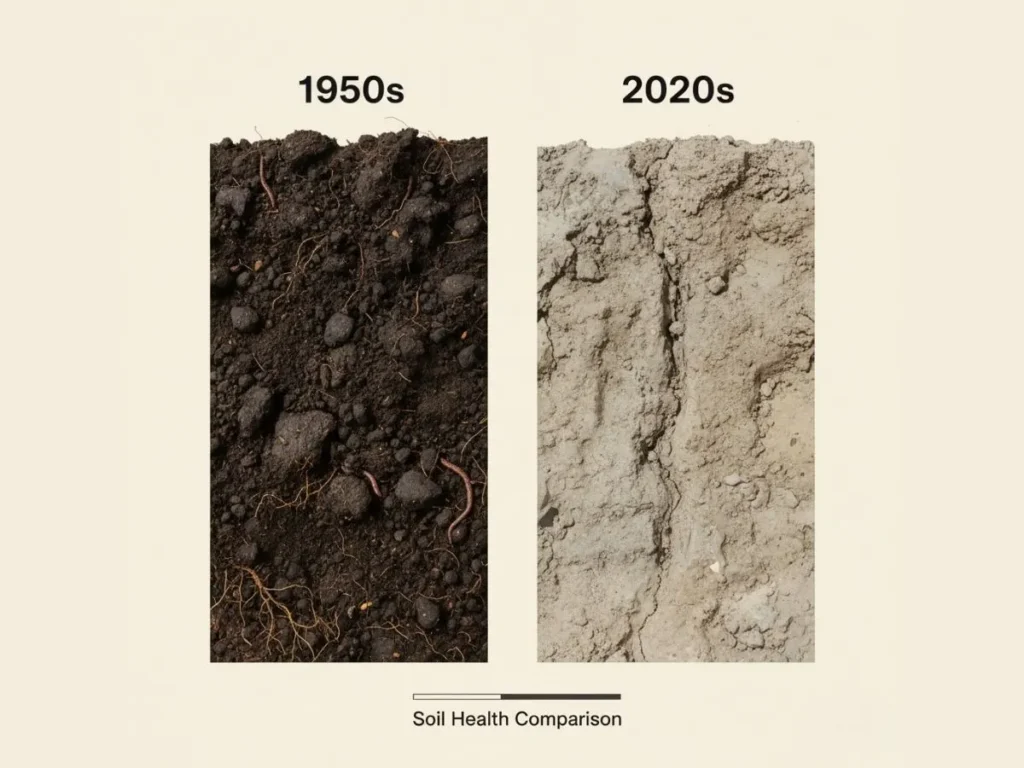
Suggested image placement: Side-by-side graphic of rich dark soil (1950s) vs pale depleted modern soil (2020s).
What Are Trace Minerals and Why They Matter
Trace minerals are the micronutrients your body needs in very small amounts but relies on for major biological processes — including energy production, detoxification, and DNA repair.
Key examples include:
- Zinc: immune and hormone balance
- Magnesium: muscle and nerve function
- Selenium: antioxidant defense
- Copper: iron metabolism
- Manganese & Chromium: glucose and fat metabolism
Without them, enzymes slow down, hormones lose balance, and cellular energy falters.
Statistic: The U.S. Department of Agriculture (USDA) reports that since 1940, magnesium content in vegetables has fallen by 19–25%, and iron levels in grains by up to 30%.
The Silent Decline of Soil Mineral Content
Modern agriculture prioritizes yield over quality. Monocropping and chemical fertilizers feed plants with just three macronutrients — nitrogen, phosphorus, potassium (NPK) — ignoring dozens of trace minerals that sustain soil vitality.
Without organic matter, earthworms, and diverse microbes, the soil’s natural ability to cycle and release minerals collapses.
The Link Between Soil Health and Human Nutrition
Healthy soil acts like a biological digestive system — it breaks down rock and organic matter into absorbable nutrients.
When this living ecosystem is compromised, plants grow but contain less mineral density, meaning every bite delivers fewer micronutrients.
Expert Quote:
“We’re feeding ourselves calories, not nutrients. Soil depletion has created hidden hunger even in well-fed populations,” says Dr. Maria Klein, PhD, environmental nutrition researcher at Stanford University.
Key Minerals Most Americans Are Missing
| Mineral | Function | % of Americans Deficient (NHANES Data) |
|---|---|---|
| Magnesium | Energy metabolism, stress resilience | 48% |
| Zinc | Immunity, hormone balance | 35% |
| Selenium | Thyroid, antioxidant defense | 15% |
| Iron | Oxygen transport, cognition | 14% |
| Manganese | Enzyme activation, joint health | 12% |
| Copper | Collagen, red blood cell formation | 9% |
How Modern Farming Depletes Soil Nutrients
- Monocropping: growing the same crop repeatedly without rotation.
- Synthetic Fertilizers: replace only N-P-K, ignoring trace minerals.
- Pesticides and Herbicides: damage soil microbes that release minerals.
- Erosion: loss of topsoil where most nutrients reside.
- Industrial Irrigation: leaches minerals through runoff.
According to the FAO (Food and Agriculture Organization), we’ve already lost 33% of global topsoil fertility — with the U.S. Midwest among the hardest hit.
The Health Impact of Trace Mineral Deficiency
When the soil loses its minerals, the human body eventually mirrors that depletion.
Common consequences include:
- Low energy and chronic fatigue
- Hormonal imbalance (low testosterone, PMS, thyroid issues)
- Poor immune defense and slower recovery
- Mood instability and cognitive decline
- Weaker bones and connective tissue
Deficiency doesn’t appear overnight — it’s silent and cumulative, gradually eroding vitality.
How to Rebuild Trace Mineral Intake Naturally
1. Eat Soil-Connected Foods
Choose regeneratively grown or organic local produce — these contain up to 60% higher mineral content than conventional crops.
2. Use Mineral-Rich Salt
Switch to unrefined sea salt or Himalayan pink salt for small amounts of trace elements.
3. Drink Structured or Mineralized Water
Many filtered waters strip minerals; consider adding electrolyte drops or spring water sources.
4. Include Animal Sources
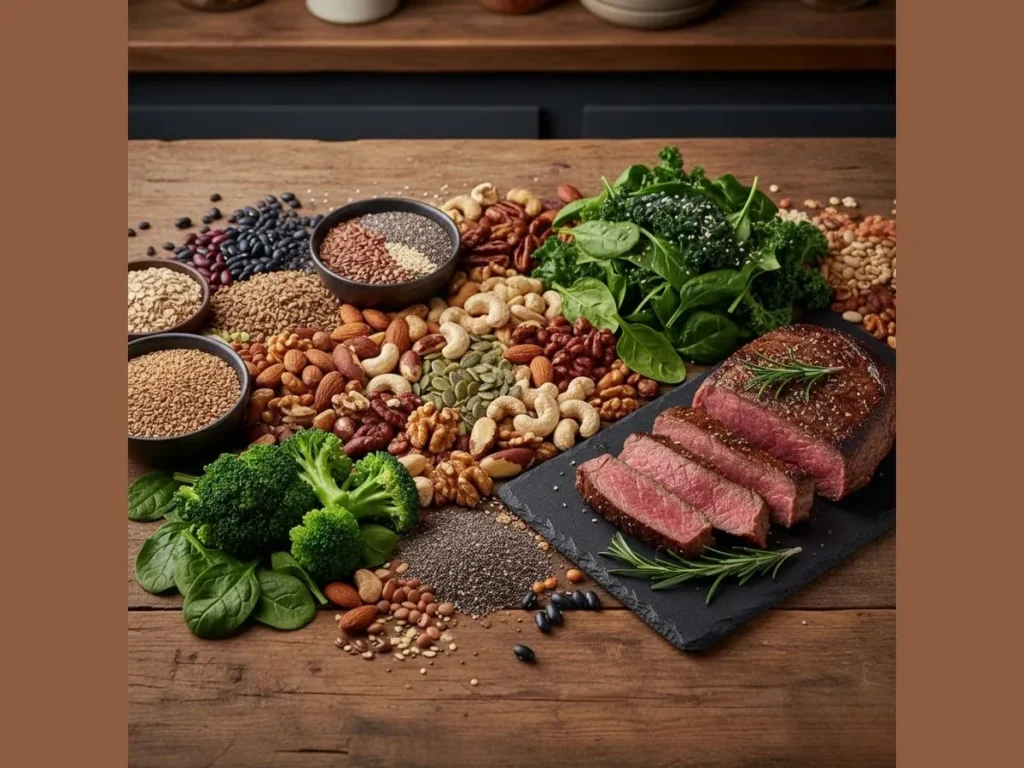
Pasture-raised eggs, grass-fed beef, and organ meats are rich in zinc, iron, and copper.
5. Rebuild the Gut
A healthy microbiome enhances mineral absorption — use prebiotics and fermented foods.
Food Sources and Supplementation Table
| Nutrient | Best Food Source | Supplemental Form | Notes |
|---|---|---|---|
| Magnesium | Pumpkin seeds, dark chocolate | Magnesium glycinate | Highly absorbable |
| Zinc | Oysters, beef, chickpeas | Zinc picolinate | Supports immunity |
| Selenium | Brazil nuts | Selenomethionine | Only 1–2 nuts daily needed |
| Iron | Red meat, lentils | Iron bisglycinate | Gentle on stomach |
| Copper | Liver, cashews | Copper gluconate | Balance with zinc |
Practical Checklist for Mineral Replenishment
- Buy local, regeneratively grown produce
- Rotate protein and plant sources weekly
- Add unrefined mineral salt to meals
- Use mineral drops in filtered water
- Limit processed, refined carbs
- Support gut health for better absorption
Expert Insights
“We can’t supplement our way out of soil depletion,” warns Dr. Robert Graham, MD, integrative physician. “Nutrition starts in the soil. True recovery requires restoring the ecosystem that feeds us.”
FAQs
Q1: Can supplements fully replace minerals lost in food?
A: They can help, but food-based minerals are absorbed more efficiently and balanced naturally with cofactors.
Q2: Is organic produce always richer in minerals?
A: Generally yes, but regenerative farming practices make the biggest difference in restoring soil mineral density.
Q3: How long does it take to correct deficiencies?
A: Most people notice improvements in 2–3 months of consistent diet and mineral support.
Q4: Are trace minerals safe in supplement form?
A: Yes, when taken in balanced doses. Excess zinc or iron without copper can cause imbalance.
Q5: Can soil health impact future generations?
A: Absolutely. Depleted soils mean nutrient-poor foods, affecting fertility, immunity, and metabolic health for decades.
Authoritative Resources
- USDA Agricultural Research Service – Nutrient Decline Studies
- Harvard T.H. Chan School of Public Health – Micronutrients and Health
- FAO – State of the World’s Soils Report
- Rodale Institute – Regenerative Organic Agriculture Research
Other Interesting Articles
Conclusion & Call-to-Action
Modern agriculture has created abundance — but at the cost of nutritional depth.
Our food looks the same, but its mineral blueprint has faded. The path back to true nourishment lies not in lab-made supplements but in restoring the mineral life of soil itself.
Action Step: This week, buy from local regenerative farms, eat mineral-rich whole foods, and explore Epsom or sea salt baths to gently boost magnesium and sulfate. Every choice helps rebuild both your health and the planet’s foundation.