
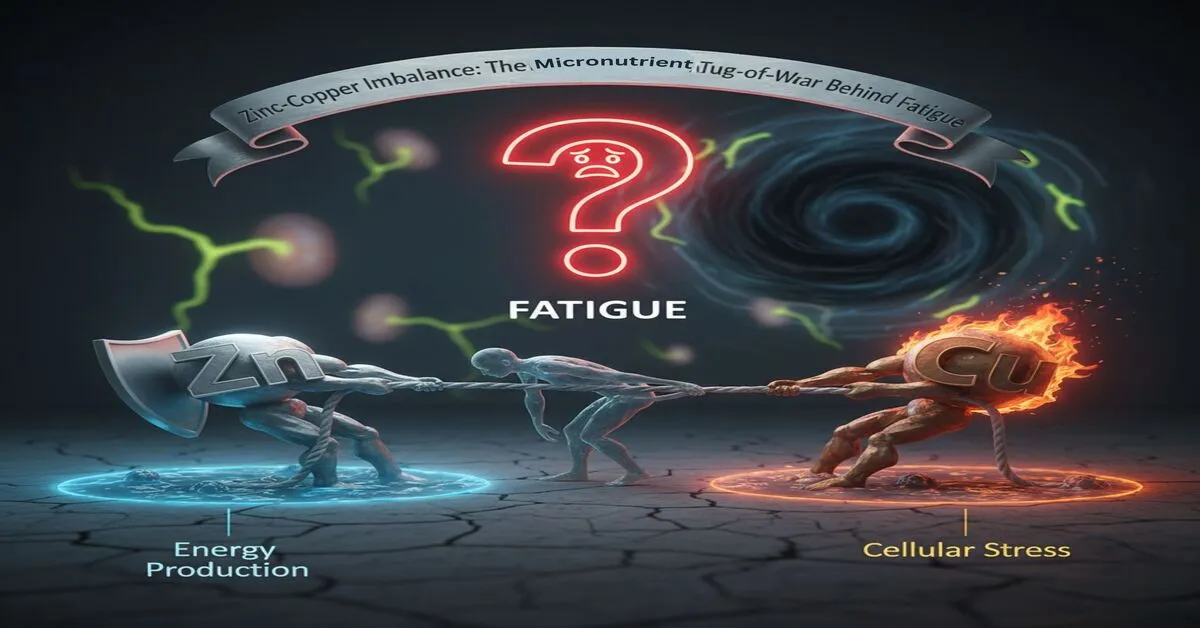
Micronutrients often play quiet roles in metabolism — until they fall out of balance.
Among the most overlooked yet powerful interactions in the human body is the zinc-copper relationship. When one dominates, the other falters — leading to energy dips, hormonal changes, and even mood swings.
This article breaks down how zinc and copper compete inside your body, what imbalance looks like, and how to restore the equilibrium for lasting vitality.
The Hidden Micronutrient Competition
Zinc and copper are essential trace minerals with opposite metabolic effects:
- Zinc supports immune strength, testosterone production, and cell repair.
- Copper drives energy metabolism, antioxidant defense, and neurotransmitter function.
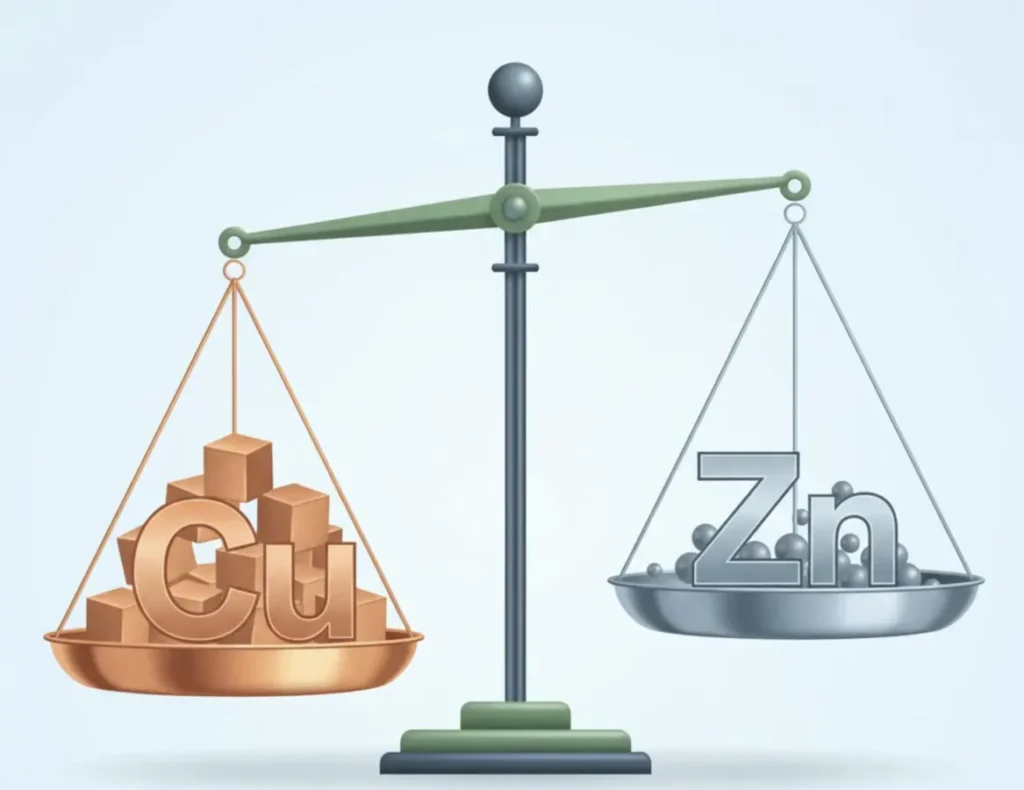
But they use the same transport system in your gut — meaning an excess of one can block the other.
When this ratio shifts, fatigue, brain fog, and low motivation often follow.
Why Zinc Dominance Is a Modern Issue
Many Americans unknowingly push themselves into zinc dominance through over-supplementation.
Zinc is found in everything from multivitamins to immune boosters, while copper is rarely supplemented and often stripped from processed foods.
| Factor | Zinc Intake | Copper Intake |
|---|---|---|
| Multivitamins | 15–30 mg | <1 mg |
| Immune formulas | 25–50 mg | — |
| Average diet | Moderate | Low due to processed foods |
Expert Insight:
“Zinc and copper exist in a biological seesaw. Tip it too far, and fatigue, poor focus, and metabolic slowdown often appear.”
— Dr. Bruce Ames, Micronutrient Researcher, University of California, Berkeley
Symptoms of Zinc-Copper Imbalance
An imbalance can look subtle — chronic tiredness, low mood, or declining workout recovery.
Here’s how both extremes present themselves:
| Zinc Excess (Copper Deficiency) | Copper Excess (Zinc Deficiency) |
|---|---|
| Fatigue, brain fog | Anxiety, irritability |
| Low libido, low testosterone | PMS, skin pigmentation issues |
| Pale skin, brittle hair | Fatigue, immune weakness |
| Anemia-like symptoms | Overactive nervous system |
| Slow wound healing | Joint pain or stiffness |
The Energy Link: How Copper Drives ATP Production
Copper plays a starring role in mitochondrial function — specifically in cytochrome c oxidase, the enzyme that converts oxygen into usable energy (ATP).
When copper is low, this process slows down, making cells less efficient at generating energy even with proper nutrition or sleep.
This is why many people with unexplained fatigue or “adrenal burnout” symptoms test low in copper or show poor zinc-to-copper ratios.
Hormonal & Neurological Impacts
Both minerals influence hormones and neurotransmitters:
- Zinc: Involved in testosterone and thyroid hormone synthesis.
- Copper: Supports dopamine and serotonin conversion, influencing mood stability.
A long-term imbalance can manifest as:
- Irritability and depression
- Poor stress response
- Low motivation or drive
- Reduced focus or mild anxiety

How to Restore the Balance
1. Test, Don’t Guess
Request serum zinc and copper tests, along with ceruloplasmin (a protein that binds copper).
Optimal ratio: Zinc-to-Copper ≈ 8:1 to 10:1
2. Eat to Balance
Prioritize whole-food sources before supplements:
| Zinc-Rich Foods | Copper-Rich Foods |
|---|---|
| Oysters, beef, pumpkin seeds | Dark chocolate, cashews, liver, mushrooms |
3. Supplement Cautiously
If taking zinc:
- Keep total intake below 25 mg/day unless prescribed.
- Pair with 1–2 mg copper if supplementing long-term.
4. Address Gut Health
Imbalance often worsens with poor absorption.
A healthy gut microbiome supports trace mineral uptake naturally.

FAQs
1. How can I tell if I have a zinc-copper imbalance without testing?
Mild imbalances often show up as chronic fatigue, poor concentration, loss of taste or smell, and brittle nails. If you’re supplementing zinc for immunity long-term without copper, imbalance is likely. However, testing remains the only accurate way to confirm.
2. What is the ideal zinc-to-copper ratio for optimal health?
The recommended serum zinc-to-copper ratio is typically 8:1 to 10:1. Ratios below 7:1 suggest copper deficiency, while values above 12:1 may indicate zinc dominance — both can impair metabolism and mood.
3. Can I fix a zinc-copper imbalance through diet alone?
Yes — in most mild cases, diet can correct the imbalance naturally. Incorporate oysters, beef, and pumpkin seeds for zinc, and dark chocolate, cashews, and liver for copper. For more severe imbalances, guided supplementation may be necessary.
4. Is taking a multivitamin enough to maintain balance?
Not always. Many multivitamins include 10–25 mg zinc but no copper. Check labels and choose formulations that maintain a balanced ratio or supplement copper separately if needed.
5. Can a zinc-copper imbalance affect hormones or mental health?
Yes. Zinc supports testosterone and thyroid hormones, while copper is vital for dopamine and serotonin production. Imbalance may lead to low libido, anxiety, mood swings, or poor stress resilience.
6. How long does it take to restore balance after correction?
It usually takes 4–8 weeks of dietary correction or low-dose supplementation to normalize the ratio, depending on severity and gut absorption health.
7. Who is most at risk for zinc-copper imbalance?
Those at higher risk include:
- People taking long-term zinc supplements for acne or immunity
- Vegans or vegetarians (low zinc intake)
- Individuals with celiac or gut absorption issues
- People consuming highly processed diets low in copper-rich foods
Actionable Checklist for Micronutrient Balance
✅ Get blood tests before starting supplements.
✅ Avoid long-term high-dose zinc.
✅ Include copper-rich foods weekly.
✅ Track energy and mood changes.
✅ Reevaluate ratios every 6–12 months.
Authoritative Resources
- National Institutes of Health – Zinc Fact Sheet
- NIH – Copper Fact Sheet
- Journal of Trace Elements in Medicine and Biology – “The Zinc–Copper Balance and Human Health”
Other Interesting Article (from Fitoast.com)
Conclusion
Your energy depends on more than calories or caffeine — it relies on the micronutrient harmony inside your cells.
Balancing zinc and copper isn’t about chasing megadoses but restoring biological equilibrium.
In the modern supplement-heavy world, fatigue often starts not from deficiency — but from imbalance.
Call to Action
If you’ve been feeling inexplicably drained or mentally foggy despite eating well, get your zinc-copper ratio tested.
A simple correction could reignite your focus, energy, and hormonal balance within weeks.