
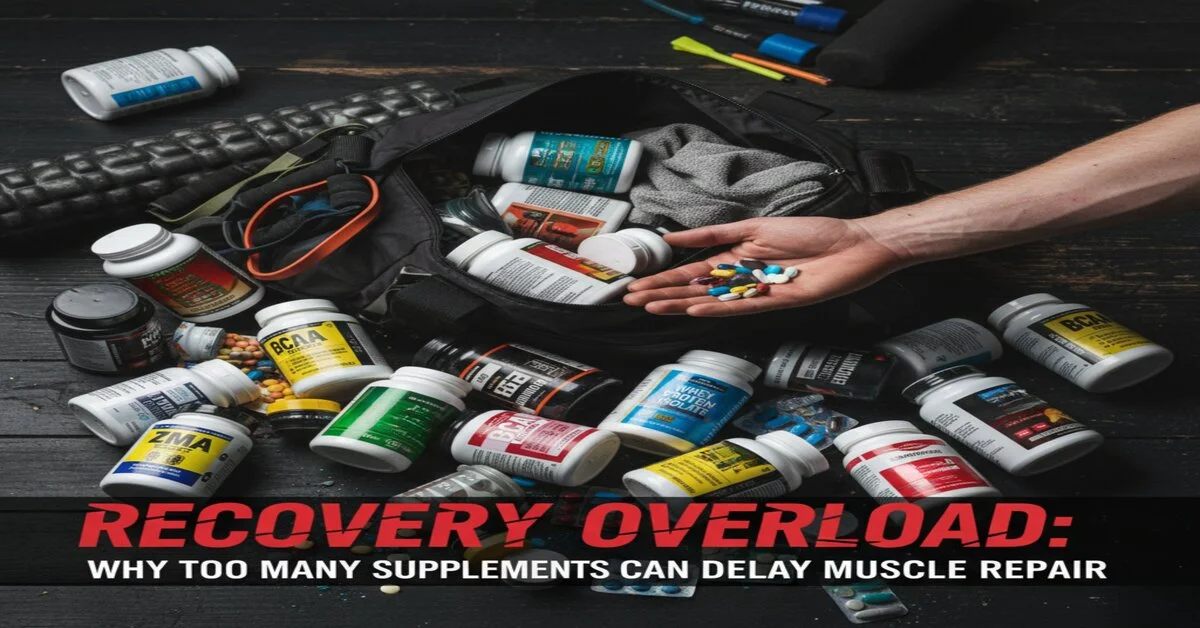
Modern fitness culture thrives on optimization—more protein, more BCAAs, more pre-workout, more recovery powders. Yet, an unexpected truth is emerging: too many supplements can actually slow down muscle repair and recovery instead of enhancing it.
This article breaks down the growing issue of “recovery overload”, the biological mechanisms behind supplement interference, and what evidence-backed strategies actually restore your muscles faster.
What Is Recovery Overload?
Recovery overload occurs when excessive supplementation disrupts your body’s natural recovery signals—particularly inflammation, oxidative stress, and hormone regulation.
In moderation, these processes trigger muscle repair. But when constantly blunted by supplements, your body’s adaptive machinery can’t operate efficiently.

The Science Behind Muscle Repair
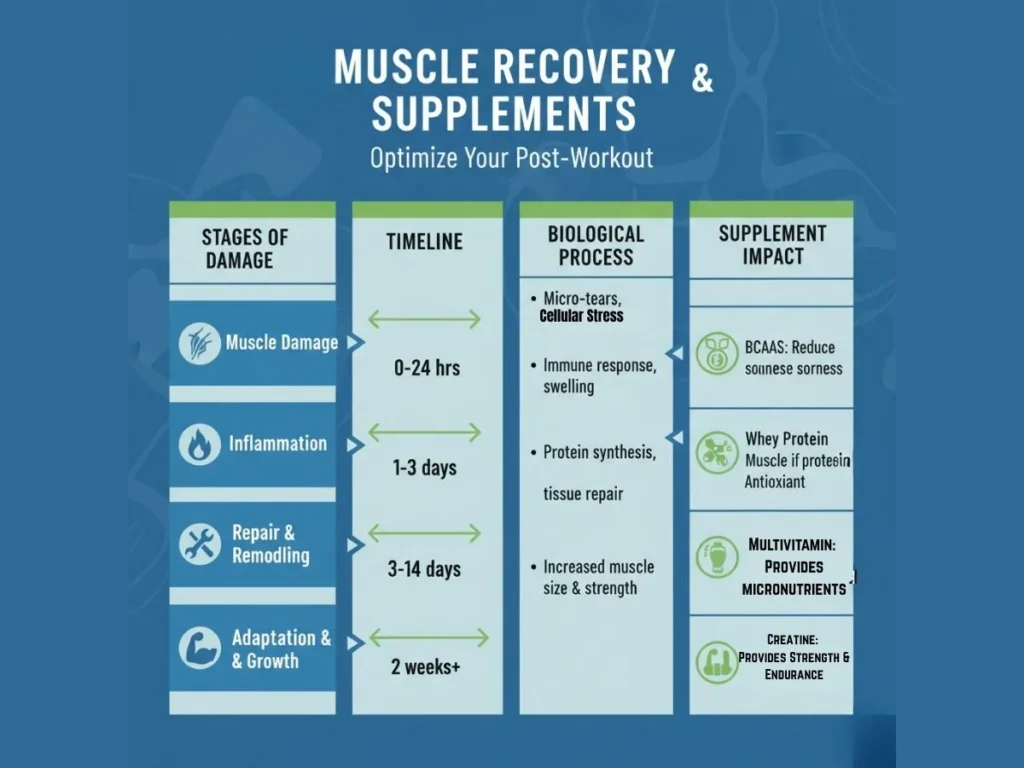
| Recovery Stage | What Happens | How Supplements Can Interfere |
|---|---|---|
| Inflammation Phase (0–48 hrs) | Minor inflammation signals tissue repair | Overuse of anti-inflammatories (e.g., curcumin, omega-3) can suppress natural healing |
| Repair Phase (2–5 days) | Satellite cells rebuild muscle fibers | Constant amino acid intake may blunt natural protein turnover signals |
| Remodeling Phase (5–10 days) | Muscle strengthens and adapts | Chronic antioxidant use (vitamin C, E) can reduce beneficial oxidative signaling |
When “More” Becomes Counterproductive
Many athletes unknowingly create an antagonistic environment by stacking multiple recovery supplements at once.
Excessive doses of the following can backfire:
- Antioxidants (Vitamin C, E) — Too much can blunt mitochondrial adaptation.
- Omega-3s — Over-supplementation reduces muscle protein synthesis signaling.
- Curcumin — Chronic use suppresses inflammatory cascades needed for tissue growth.
- High-dose BCAAs — Can interfere with full amino acid balance and delay glycogen resynthesis.
- Caffeine — Impairs deep sleep cycles, reducing growth hormone secretion crucial for muscle repair.
Expert Insight:
“Inflammation isn’t the enemy—it’s part of the blueprint for muscle repair. Suppressing it completely delays adaptation.”
— Dr. Mike Israetel, PhD, Exercise Physiology
The Hidden Biological Costs of Recovery Overload
1. Oxidative Stress Rebound
Over-supplementing antioxidants can cause a paradoxical effect where the body’s natural antioxidant system (glutathione, catalase) becomes downregulated.
2. Gut Barrier Stress
High supplement loads (especially powders) may irritate the intestinal lining, impairing nutrient absorption—leading to fatigue and slower muscle healing.
3. Hormonal Interference
Adaptogens and herbal stacks (ashwagandha, rhodiola) in excess can dysregulate cortisol rhythm, altering recovery timing and sleep quality.
Signs You’re Experiencing Supplement Burnout
| Symptom | Likely Cause |
|---|---|
| Persistent soreness | Blunted inflammation response |
| Fatigue despite “rest days” | Overuse of adaptogens or caffeine |
| Poor digestion or bloating | Excess powdered nutrients |
| Sleep disruption | Too much caffeine or B-vitamins late in the day |
| Slower strength gains | Interference with anabolic signaling |
Rebuilding a Smarter Recovery Routine
1. Reintroduce Natural Recovery Stress
Allow mild inflammation post-workout—avoid megadosing anti-inflammatories immediately after training.
2. Time Supplements Strategically
- Protein: within 1 hour post-workout
- Creatine: anytime during the day
- Omega-3: only 2–3x per week if diet is low in fish
3. Focus on Food-First Recovery
Whole-food sources contain synergistic nutrients that work better than isolated compounds:
- Salmon for omega-3s
- Blueberries for polyphenols
- Spinach for natural nitrates
- Eggs for leucine and choline
4. Prioritize Sleep as the Ultimate Recovery Supplement
Deep sleep drives muscle protein synthesis, tissue repair, and hormonal balance. Limit caffeine after noon and keep a consistent sleep window.

Actionable Checklist: Smarter Supplement Use
✅ Audit your current stack—remove duplicates.
✅ Reduce antioxidants unless prescribed.
✅ Track soreness and energy patterns weekly.
✅ Use a food-first strategy before supplementing.
✅ Take supplement breaks (cycling every 8–12 weeks).
Authoritative Resources
- National Institutes of Health – Dietary Supplements Fact Sheet
- Journal of Applied Physiology
- American College of Sports Medicine
Other Interesting Article (from Fitoast.com)
Conclusion
More supplements don’t mean more recovery. Your body thrives on balance, not biochemical bombardment. By respecting the body’s innate repair systems and adopting a food-first, evidence-based approach, you’ll rebuild stronger, recover faster, and perform longer.
Call to Action
If you’ve been relying on multiple recovery supplements and still feel stuck, try a “recovery reset week”—cut back to whole foods and essential nutrients only. Monitor your energy, sleep, and soreness. You may discover that less really is more.