
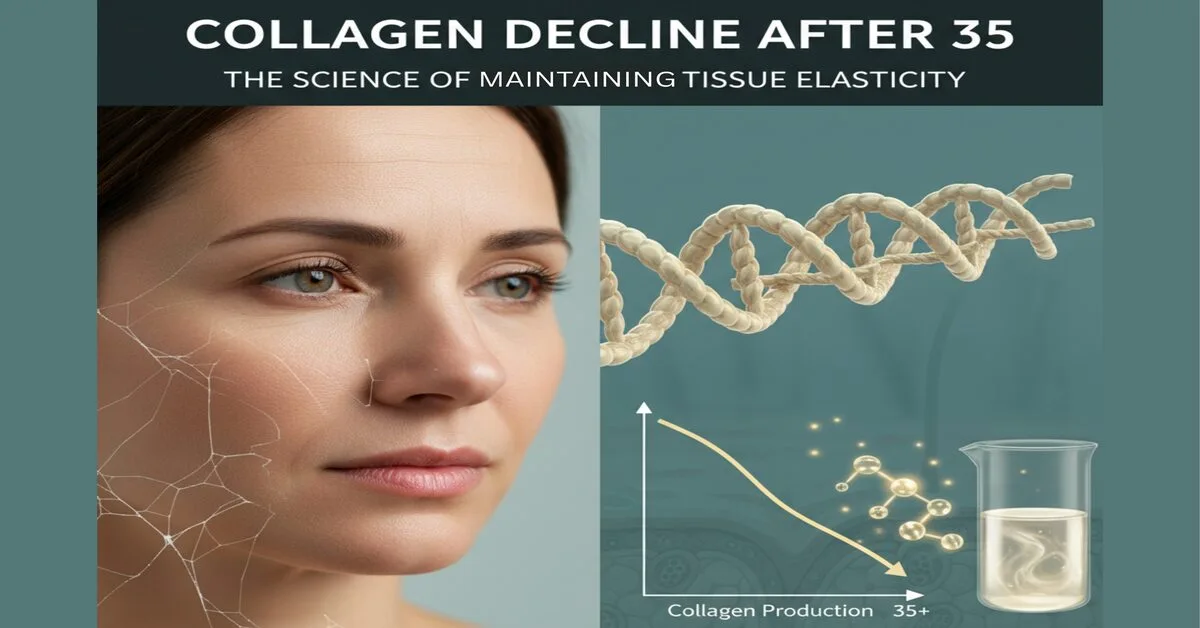
Most people think wrinkles, joint stiffness, and sagging skin are just signs of aging — but underneath those changes lies a single, powerful biological shift: collagen decline.
After age 35, your body’s collagen production begins to drop by 1–2% per year, leading to slower tissue repair, weaker joints, and visible skin aging.
But here’s the surprising truth — collagen loss isn’t irreversible. With the right nutrition, lifestyle alignment, and cellular support, you can preserve and even restore collagen synthesis naturally.
What Exactly Is Collagen?
Collagen is the most abundant protein in the human body, making up over 30% of total protein mass. It acts as the scaffolding for your:
- Skin
- Bones
- Muscles
- Tendons
- Blood vessels
Think of it as the body’s internal glue — the structure that keeps everything firm, resilient, and elastic.
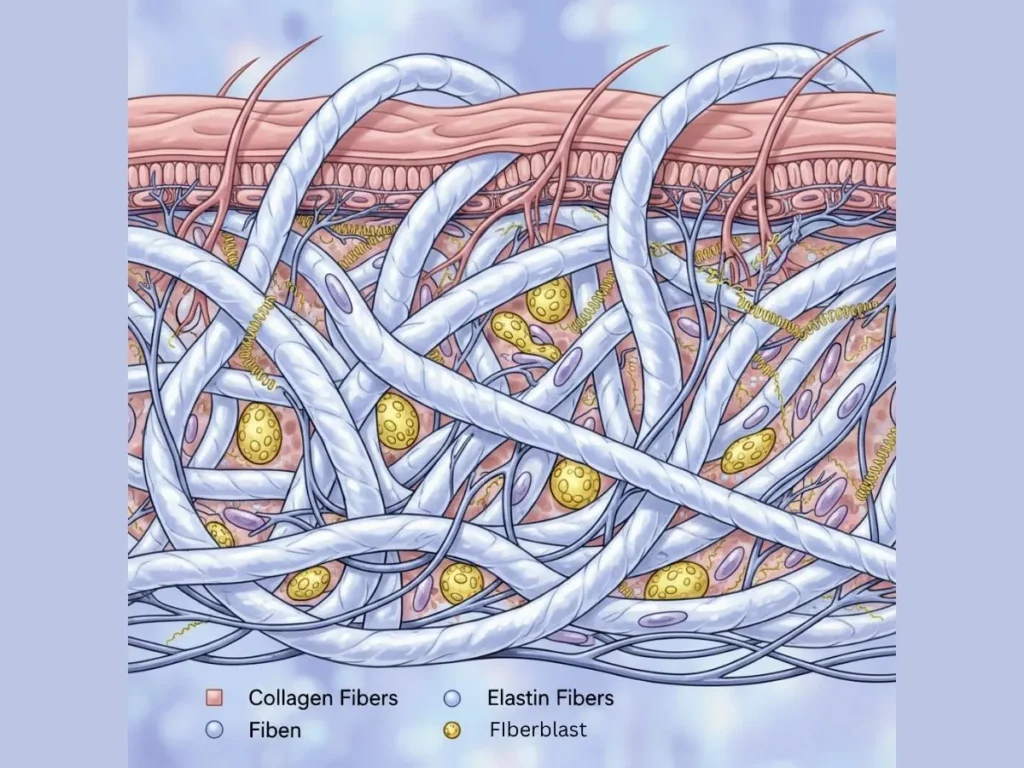
Why Collagen Production Declines After 35
Several factors accelerate collagen breakdown as you age:
- Hormonal Shifts – Estrogen and testosterone levels drop, reducing collagen synthesis.
- Oxidative Stress – Free radicals from UV exposure, pollution, and stress damage collagen fibers.
- Glycation – High-sugar diets cause glucose to bind to collagen, making it brittle.
- Inflammation – Chronic low-grade inflammation breaks down connective tissue enzymes.
Key Statement:
By age 40, the average person produces 25% less collagen than in their twenties — leading to visible aging and reduced tissue elasticity.
How Collagen Impacts More Than Skin
| System | Role of Collagen | Signs of Decline |
|---|---|---|
| Skin | Maintains firmness & hydration | Wrinkles, dullness, sagging |
| Joints & Tendons | Provides cushioning & flexibility | Stiffness, cracking joints |
| Muscles | Supports repair & tone | Slower recovery, reduced strength |
| Bones | Builds bone matrix | Osteopenia, reduced density |
| Gut Lining | Protects intestinal barrier | Bloating, sensitivity |
The Science of Collagen Synthesis
Collagen is made inside fibroblast cells using amino acids (glycine, proline, hydroxyproline) — but the process requires cofactors like vitamin C, copper, and zinc.
When any of these nutrients are deficient, collagen formation slows dramatically.
Additionally, the enzyme prolyl hydroxylase that stabilizes collagen depends on adequate oxygen and antioxidants — meaning poor circulation or oxidative stress can halt synthesis.

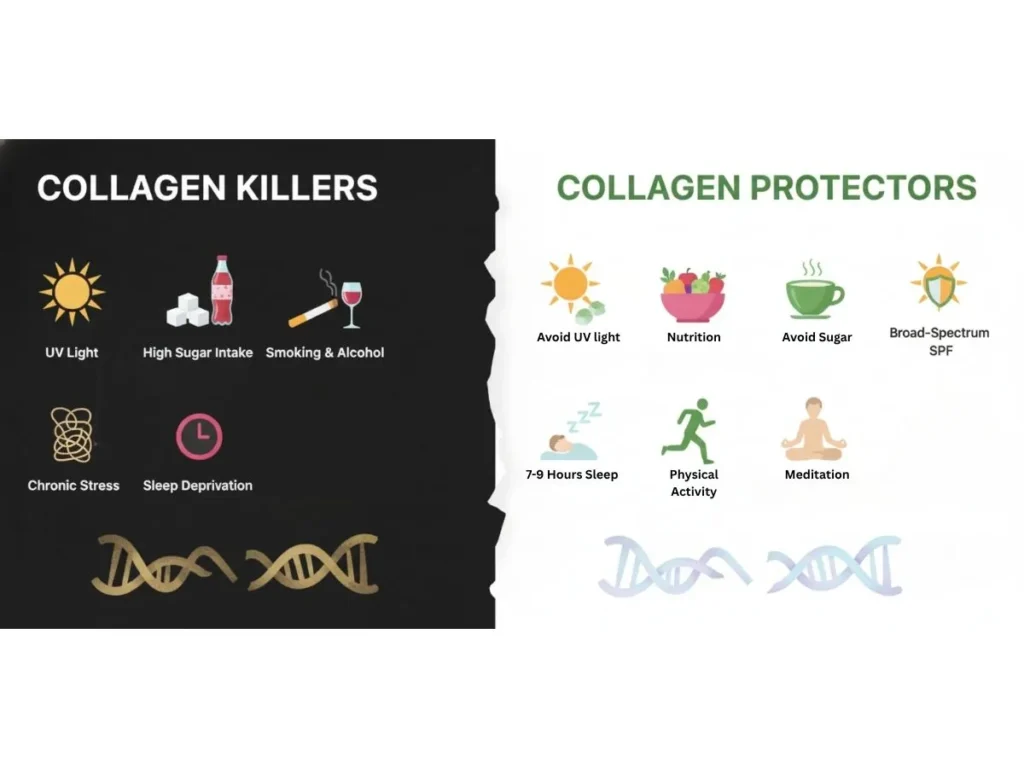
Collagen Killers in Everyday Life
| Factor | Why It Damages Collagen | How to Counter It |
|---|---|---|
| UV Light | Breaks down collagen fibers | Use broad-spectrum SPF daily |
| High Sugar Intake | Promotes glycation | Limit added sugars & processed foods |
| Smoking & Alcohol | Increases oxidative stress | Avoid or limit exposure |
| Sleep Deprivation | Reduces growth hormone | Maintain 7–9 hours of deep sleep |
| Chronic Stress | Raises cortisol, slows repair | Practice relaxation & circadian nutrition |
Foods That Support Collagen Production
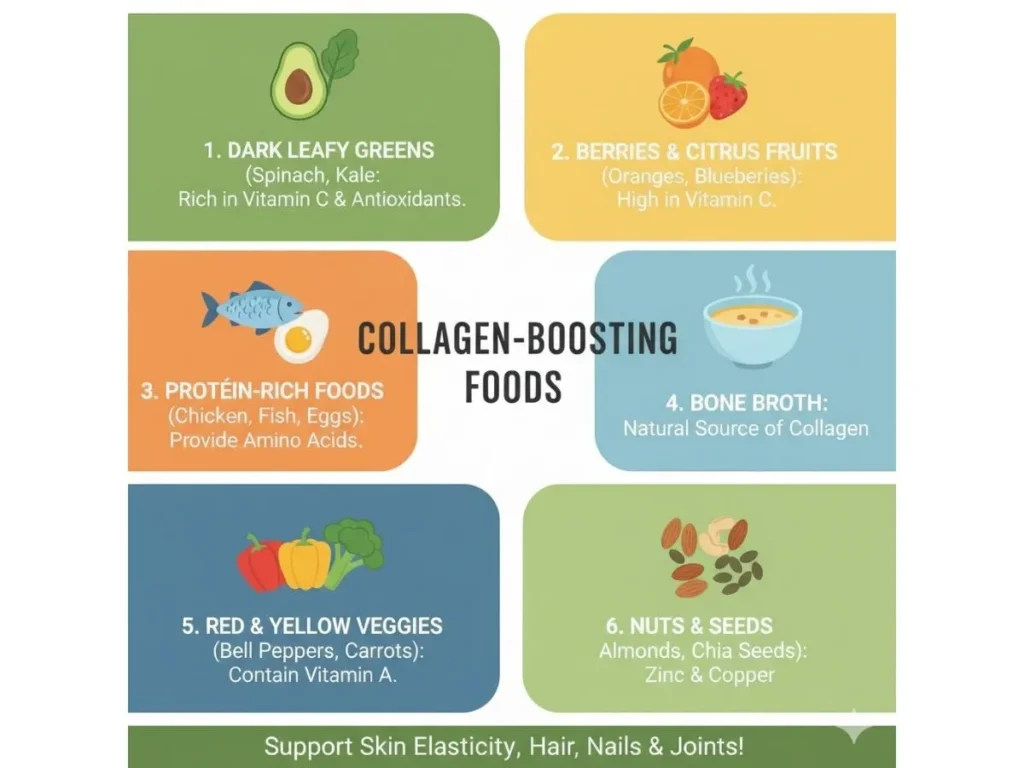
You don’t need fancy supplements — collagen health starts in your kitchen.
| Nutrient | Best Sources | Function |
|---|---|---|
| Vitamin C | Citrus, bell peppers, kiwi | Builds and stabilizes collagen triple helix |
| Copper & Zinc | Shellfish, seeds, nuts | Activate collagen-producing enzymes |
| Glycine & Proline | Bone broth, egg whites, gelatin | Raw materials for collagen |
| Antioxidants | Berries, green tea, turmeric | Prevent collagen oxidation |
| Omega-3 Fatty Acids | Salmon, chia, flax | Reduce inflammation and protect fibers |
Do Collagen Supplements Actually Work?
Recent studies show hydrolyzed collagen peptides (especially type I and III) can improve skin elasticity and joint comfort when taken consistently for 8–12 weeks.
However, the results depend on:
- Dosage (5–10g daily minimum)
- Consistency (taken daily for at least 2–3 months)
- Synergy with nutrients like vitamin C and antioxidants
Fun Fact: Marine collagen is absorbed 1.5x faster than bovine collagen due to smaller peptide size.
Lifestyle Strategies to Slow Collagen Decline
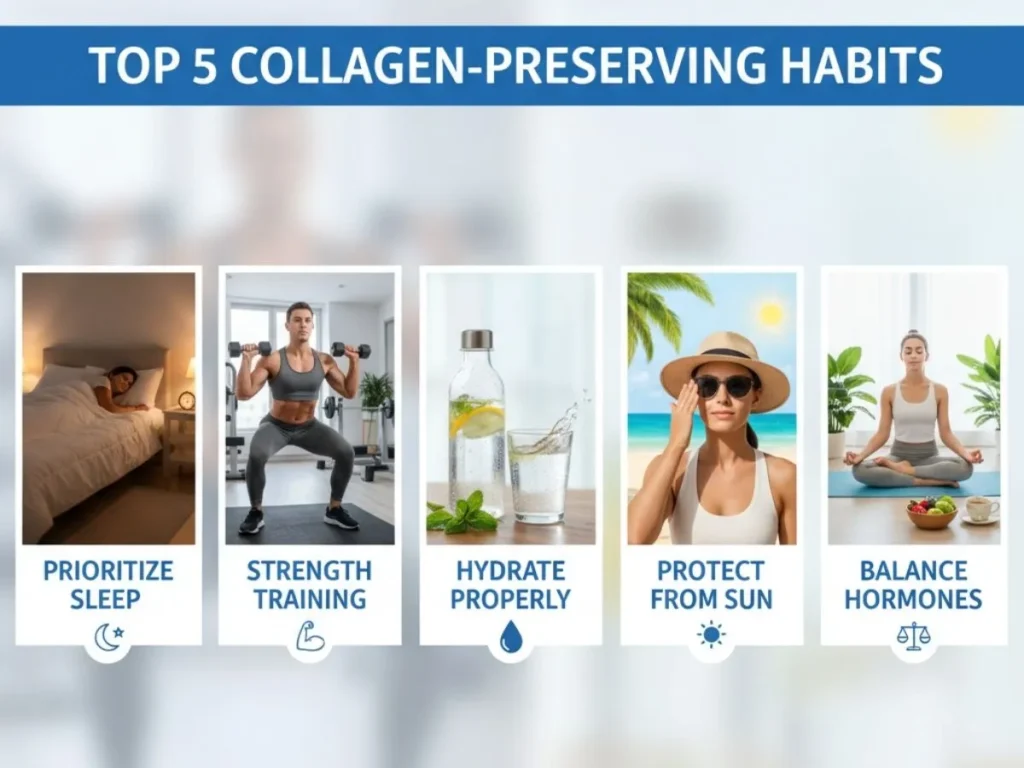
- Prioritize Sleep: Growth hormone peaks during deep sleep — the same window collagen repair happens.
- Strength Training: Stimulates fibroblast activity and increases collagen density in tendons.
- Hydrate Properly: Collagen fibers rely on water molecules for elasticity.
- Protect from Sun: 80% of visible facial aging is linked to UV exposure.
- Balance Hormones: Estrogen and DHEA support collagen — discuss safe options with a functional doctor.
Expert Quote
“Collagen decline is one of the earliest measurable signs of biological aging. Supporting collagen production through nutrition, movement, and recovery is more effective than reactive anti-aging products.”
— Dr. Gabrielle Lyon, DO, Functional Medicine Specialist
Authoritative Resources
Other Interesting Article
FAQs: Collagen Decline After 35
Q1. At what age does collagen start to decline?
Collagen starts decreasing around age 25–30 but becomes more noticeable after 35 as hormonal and metabolic changes accelerate the drop.
Q2. Is collagen powder safe for daily use?
Yes, when sourced from clean marine or grass-fed bovine collagen and taken within 5–10g daily.
Q3. Can vegan diets support collagen health?
Absolutely. While plants don’t contain collagen, amino acids and vitamin C-rich foods help the body produce it naturally.
Q4. Does exercise boost collagen?
Resistance and weight-bearing exercise stimulate collagen synthesis in tendons and skin.
Q5. What’s better: topical collagen or dietary collagen?
Dietary collagen is far more effective since topical collagen molecules are too large to penetrate the skin barrier.
Conclusion
Collagen decline after 35 isn’t a one-way path to aging — it’s a biological signal that your body needs more nourishment, protection, and recovery.
By optimizing diet, reducing stress, sleeping deeply, and supporting your cells with essential nutrients, you can maintain youthful elasticity, stronger joints, and radiant skin — naturally and sustainably.