

Your metabolism doesn’t just care what you eat — it deeply cares when you eat.
Modern research shows that aligning your meals with your body’s circadian rhythms — the internal clock that regulates hormones, sleep, and energy — can dramatically improve weight control, digestion, mood, and even longevity.
Yet, most Americans eat out of sync with this biological rhythm:
- Skipping breakfast
- Eating late dinners under artificial light
- Snacking deep into the night
The result? Hormonal chaos, disrupted sleep, and metabolic slowdown — all symptoms of a body running against its natural clock.
Understanding Circadian Nutrition
Circadian nutrition is the practice of timing meals to match your body’s 24-hour hormonal cycle — when insulin sensitivity, cortisol levels, and digestive enzymes naturally rise and fall.
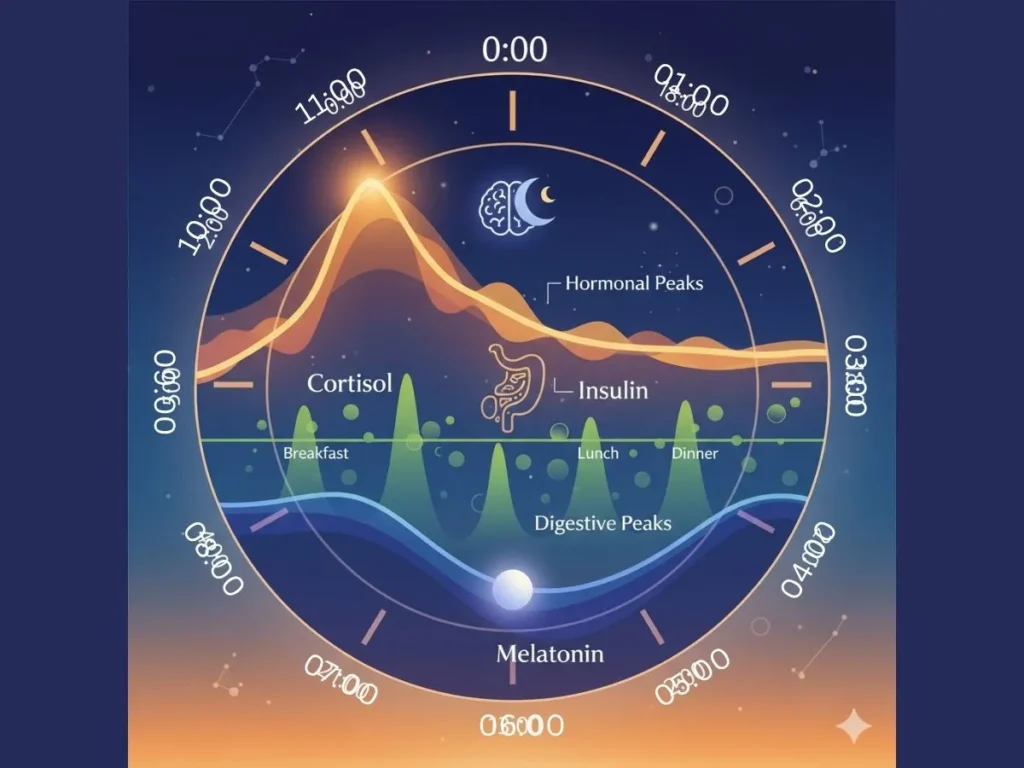
Your body’s internal clock controls when it:
- Burns calories efficiently
- Craves food
- Regulates blood sugar
- Repairs tissues during sleep
When your eating window aligns with these natural signals, your metabolism works with you, not against you.
How Hormones Dictate When You Should Eat
| Time of Day | Key Hormones | Body’s Natural State | Ideal Nutritional Strategy |
|---|---|---|---|
| 6–9 AM | Cortisol, Ghrelin | Wakefulness & appetite peak | High-protein breakfast to stabilize cortisol |
| 12–2 PM | Insulin, Thyroid Hormones | Metabolic high point | Balanced carbs + protein for sustained energy |
| 5–7 PM | Leptin, Melatonin rises | Slower digestion begins | Lighter dinner, low sugar and fat |
| 9 PM–6 AM | Melatonin, Growth Hormone | Repair and fasting phase | No eating — support natural detox |
The Science Behind Circadian Eating
Your body’s peripheral clocks — located in organs like the liver, pancreas, and gut — synchronize with the central clock in your brain (the suprachiasmatic nucleus).
When you eat outside of daylight hours, those peripheral clocks get “confused.” The result:
- Impaired glucose tolerance at night
- Increased fat storage
- Reduced insulin sensitivity
- Poor sleep and sluggish morning energy
A 2024 NIH study found that people who ate most of their calories before 3 PM had 33% better insulin response and improved leptin regulation, compared to those who ate late dinners.
Why Late-Night Eating Disrupts Hormones
Eating close to bedtime keeps insulin high — directly suppressing melatonin and reducing growth hormone secretion during sleep.
This leads to:
- Poor fat metabolism overnight
- Higher morning glucose
- Reduced muscle repair
- Fragmented sleep
Think of it as trying to “digest and repair” at the same time — your body can’t do both efficiently.
The Cortisol Connection
Cortisol — your natural “wake-up hormone” — peaks in the morning and gradually declines throughout the day.
Skipping breakfast or fasting too long in the morning keeps cortisol elevated, which can:
- Disrupt thyroid function
- Increase belly fat
- Reduce insulin sensitivity later in the day
Morning nourishment helps lower cortisol naturally and restores hormonal balance for the rest of the day.
Meal Timing Framework for Optimal Hormonal Balance
| Meal | Ideal Time | Composition | Hormonal Goal |
|---|---|---|---|
| Breakfast | 7–9 AM | Protein + healthy fat + low GI carbs | Stabilize cortisol and blood sugar |
| Lunch | 12–2 PM | Balanced macros (40% carbs, 30% protein, 30% fat) | Maximize energy and digestion |
| Snack (optional) | 3–4 PM | Protein + fiber | Prevent evening cravings |
| Dinner | 6–7 PM | Light meal, high in veggies and lean protein | Support melatonin and leptin |
| Fasting Window | 8 PM–7 AM | Water or herbal tea only | Deep repair and fat oxidation |
Circadian Fasting vs. Intermittent Fasting
While both involve eating windows, circadian fasting focuses on daytime eating (e.g., 8 AM–6 PM), whereas many intermittent fasting routines push eating windows late into the evening — which can backfire hormonally.
| Aspect | Circadian Fasting | Conventional IF |
|---|---|---|
| Eating Window | Early (e.g., 8 AM–6 PM) | Often mid-to-late (12 PM–8 PM) |
| Hormonal Sync | Matches cortisol and insulin rhythm | Often mismatched |
| Sleep Quality | Improved | Often reduced |
| Long-Term Sustainability | High | Moderate |

How Light Exposure Affects Nutrient Timing
Your circadian rhythm isn’t just about food — it’s also controlled by light exposure.
Morning sunlight helps regulate cortisol and melatonin, signaling your metabolism to “start the day.”
Nighttime screen light delays melatonin, keeping your body in a “feeding” state.
Practical tip:
- Get 10–15 minutes of natural light within 30 minutes of waking.
- Avoid bright screens or overhead LEDs 1 hour before bed.

Foods That Support Circadian Rhythms
Certain foods naturally enhance clock-regulated hormones by stabilizing blood sugar, reducing inflammation, and supporting melatonin production.
| Category | Beneficial Foods | Why It Helps |
|---|---|---|
| Morning | Eggs, oats, avocado, berries | Boost cortisol regulation and satiety |
| Afternoon | Quinoa, salmon, leafy greens | Support thyroid and insulin efficiency |
| Evening | Turkey, pumpkin seeds, tart cherries | Enhance melatonin and sleep hormones |
Expert Quote
“The timing of calories matters as much as their quality. Aligning food intake with daylight hours can improve sleep, reduce inflammation, and naturally balance hormones.”
— Dr. Satchin Panda, PhD, Author of ‘The Circadian Code’ and leading researcher on time-restricted eating
Authoritative Resources
- National Institutes of Health (NIH): Circadian Rhythms and Metabolism
- Salk Institute: Time-Restricted Eating
- Harvard Health Publishing: How can meal schedules affect your weight?
Other Interesting Article
FAQs: Circadian Nutrition
Q1. Is eating breakfast necessary for everyone?
For optimal circadian rhythm, yes. A protein-rich breakfast lowers cortisol and improves insulin response for the rest of the day.
Q2. Can night shift workers apply circadian nutrition?
Yes, though challenging. Focus on consistent eating windows and bright light during your wake cycle to simulate daylight.
Q3. Does meal timing affect weight loss?
Absolutely. Studies show earlier eating windows improve fat metabolism and prevent late-night insulin spikes.
Q4. Is coffee okay during fasting hours?
Black coffee in moderation is fine in the early morning — but avoid caffeine late in the day to protect melatonin release.
Q5. Can this work with intermittent fasting?
Yes, combine them by eating between 8 AM and 6 PM — the most hormone-aligned fasting rhythm.
Conclusion
Your body’s hormonal clock is older than any diet trend.
When you eat in sync with daylight and your natural energy rhythms, every system — from digestion to sleep — works more efficiently.
Circadian nutrition isn’t restrictive. It’s simply eating the right foods at the right time — the way your biology intended.