
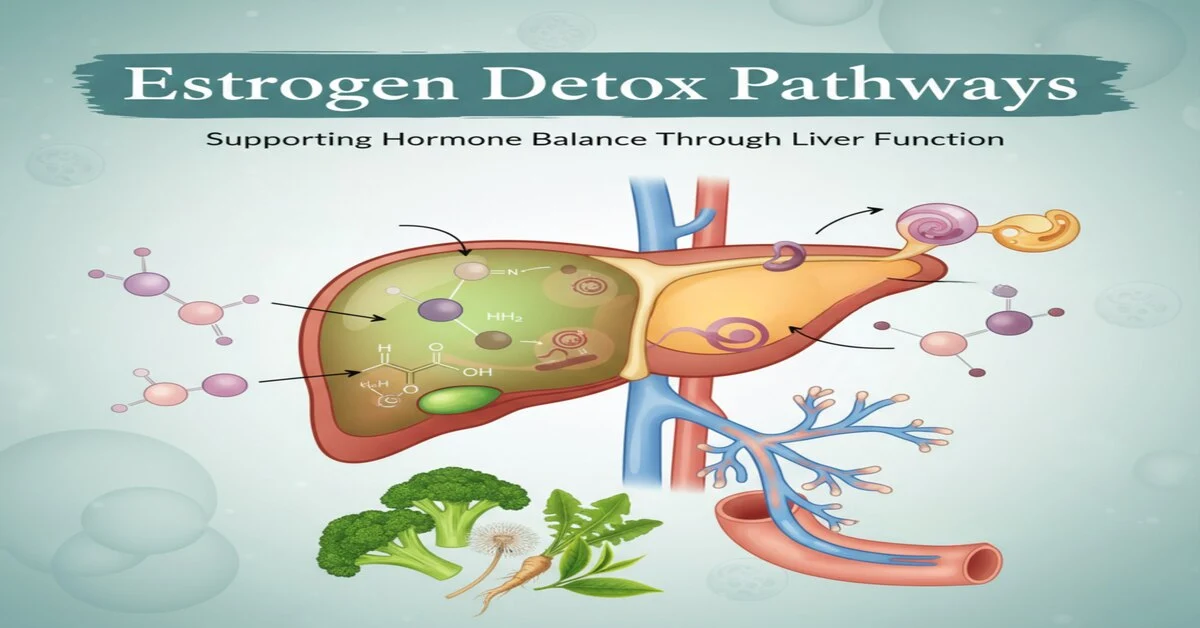
Hormonal balance isn’t just about how much estrogen your body makes — it’s about how efficiently you can detoxify and eliminate it.
When estrogen builds up faster than your liver can clear it, the result is estrogen dominance — a condition linked to weight gain, mood swings, fatigue, PMS, and even hormone-related cancers.
In 2025, more Americans than ever are unknowingly living with disrupted estrogen metabolism due to processed diets, toxin exposure, stress, and poor liver health.
Let’s break down how your liver manages estrogen — and how to support this powerful system naturally.
Understanding Estrogen Detoxification
Estrogen detoxification occurs in three main phases that help process, convert, and eliminate excess estrogen safely.
The liver is the central organ in this process, acting as your body’s biochemical filter.
| Phase | Function | Key Nutrients |
|---|---|---|
| Phase I | Converts estrogen into metabolites | B vitamins, glutathione |
| Phase II | Neutralizes reactive metabolites | Sulforaphane, magnesium |
| Phase III | Eliminates via bile and gut | Fiber, probiotics, hydration |
Phase I: Estrogen Metabolism (Hydroxylation Pathway)
In Phase I, liver enzymes (especially cytochrome P450) convert estrogen into three primary metabolites:
- 2-hydroxyestrone (protective)
- 4-hydroxyestrone (potentially harmful)
- 16α-hydroxyestrone (inflammatory)
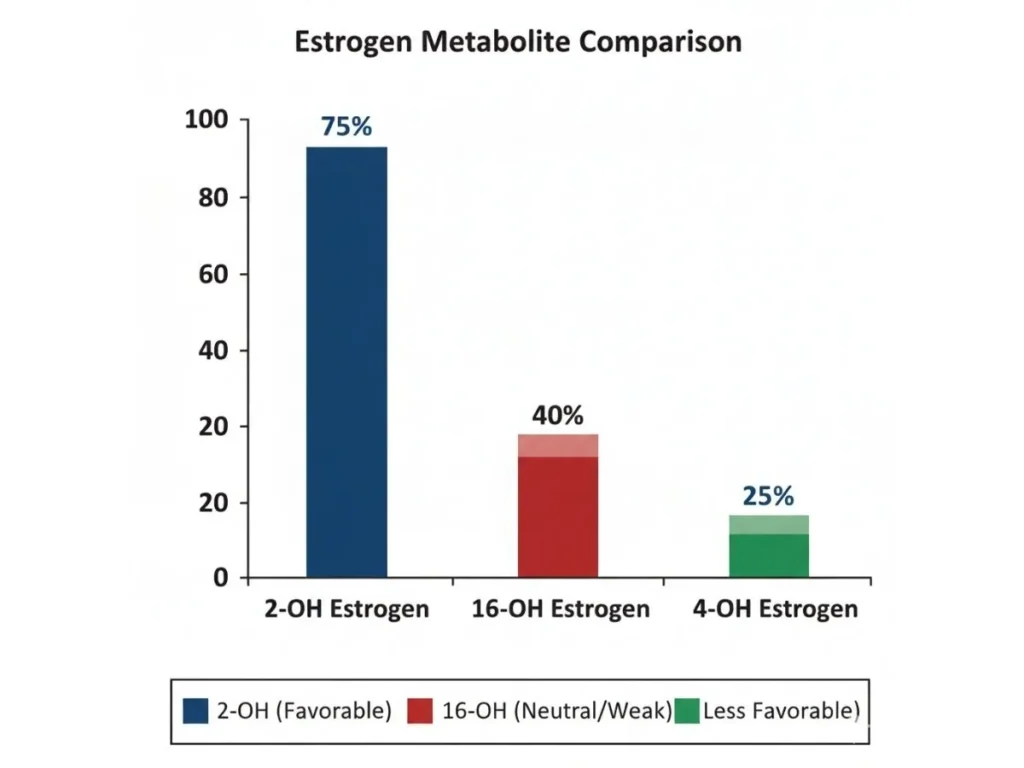
A healthy estrogen profile favors 2-hydroxyestrone, which supports balanced hormone signaling and reduces cancer risk.
Support Phase I naturally:
- Eat cruciferous vegetables (broccoli, kale, Brussels sprouts) — rich in indole-3-carbinol (I3C) and DIM, both enhance 2-hydroxy metabolism.
- Ensure adequate B2, B3, and B6 intake for optimal enzyme function.
Phase II: Conjugation (Neutralizing Estrogen Metabolites)
Phase II is the “detox lock” phase, where reactive estrogen metabolites are bound to molecules like glutathione and methyl groups for safe excretion.
This step prevents these metabolites from re-entering circulation or damaging DNA.
Key nutrients for Phase II:
- Magnesium: Required for methylation enzymes.
- Sulforaphane: Found in broccoli sprouts; boosts glutathione activity.
- SAMe, choline, and betaine: Support methylation of estrogen.
- Vitamin B12 + Folate: Crucial for homocysteine balance and detox enzyme function.
Phase III: Elimination via Bile and Gut Microbiome
Once conjugated, estrogen must exit the body through bile and stool.
However, if gut health is compromised, these estrogens can be reabsorbed — leading to recirculation and hormone imbalance.
This is where the estrobolome — a specialized group of gut bacteria — plays a vital role.
To support Phase III:
- Eat 25–35g of fiber daily (flaxseeds, chia, oats, legumes).
- Stay hydrated — water aids bile flow.
- Add probiotics (Lactobacillus & Bifidobacterium strains) to promote healthy estrogen metabolism.
- Limit alcohol and antibiotics, both disrupt gut flora and bile quality.
The Hidden Factors That Disrupt Estrogen Detox
- Processed Food & Sugar Overload: Burdens liver enzymes and spikes insulin.
- Excess Alcohol: Impairs methylation and glutathione synthesis.
- Environmental Toxins (xenoestrogens): Found in plastics, cosmetics, receipts.
- Low-Protein Diets: Amino acids are vital for Phase II conjugation.
- Chronic Stress: Cortisol dominance alters liver function and bile flow.
Checklist: Daily Habits for Estrogen Detox Support
| Time of Day | Action | Benefit |
|---|---|---|
| Morning | Warm lemon water + protein-rich breakfast | Kickstarts liver enzymes |
| Lunch | Cruciferous veggies + healthy fats | Enhances 2-OH metabolism |
| Afternoon | Hydration + herbal tea (dandelion, milk thistle) | Supports bile flow |
| Evening | Fiber-rich meal + probiotics | Boosts estrogen elimination |
| Night | 7–9 hours of sleep | Optimizes liver repair cycle |
Expert Quote
“Your liver doesn’t just process alcohol — it manages hormones, toxins, and emotions. When it slows down, estrogen builds up.”
— Dr. Carrie Jones, Functional Hormone Expert, 2025
Authoritative Resources
- National Institute of Environmental Health Sciences – Endocrine Disruptors
- Harvard T.H. Chan School of Public Health
- Cleveland Clinic – Estrogen Dominance & Liver Detoxification
Other Interesting Article
FAQ’s
Q1. Can both men and women have estrogen dominance?
Yes. While women are more affected, men exposed to xenoestrogens or with poor liver health can also experience symptoms like low libido and weight gain.
Q2. Is “estrogen detox” the same as a liver cleanse?
No. True estrogen detox focuses on supporting the liver’s biochemical pathways with nutrients, not juice fasts or extreme cleanses.
Q3. How long does it take to restore estrogen balance?
With dietary and lifestyle changes, noticeable improvements can appear in 6–12 weeks.
Q4. Can supplements like DIM or calcium-D-glucarate help?
Yes — they support Phase I and II detox, but should be guided by lab results and professional advice.
Q5. What tests measure estrogen detox efficiency?
The DUTCH test or Comprehensive Hormone Panel can measure estrogen metabolites and detox pathways.
Conclusion
Your hormones reflect your lifestyle, and estrogen detox is the bridge between the two.
By supporting your liver, gut, and detox nutrients, you can prevent estrogen buildup — and restore your natural hormonal rhythm.
Instead of harsh “cleanses,” focus on nourishment: whole foods, deep sleep, hydration, and daily fiber.
Because the key to balanced hormones isn’t deprivation — it’s biological cooperation.