
Introduction: Why Mindful Breathing Matters in 2025
Stress has become a defining challenge of modern life, especially for Americans balancing demanding work schedules, financial pressures, and constant digital noise. The CDC estimates that nearly 77% of adults in the U.S. report stress-related symptoms ranging from sleep disruption to digestive issues.
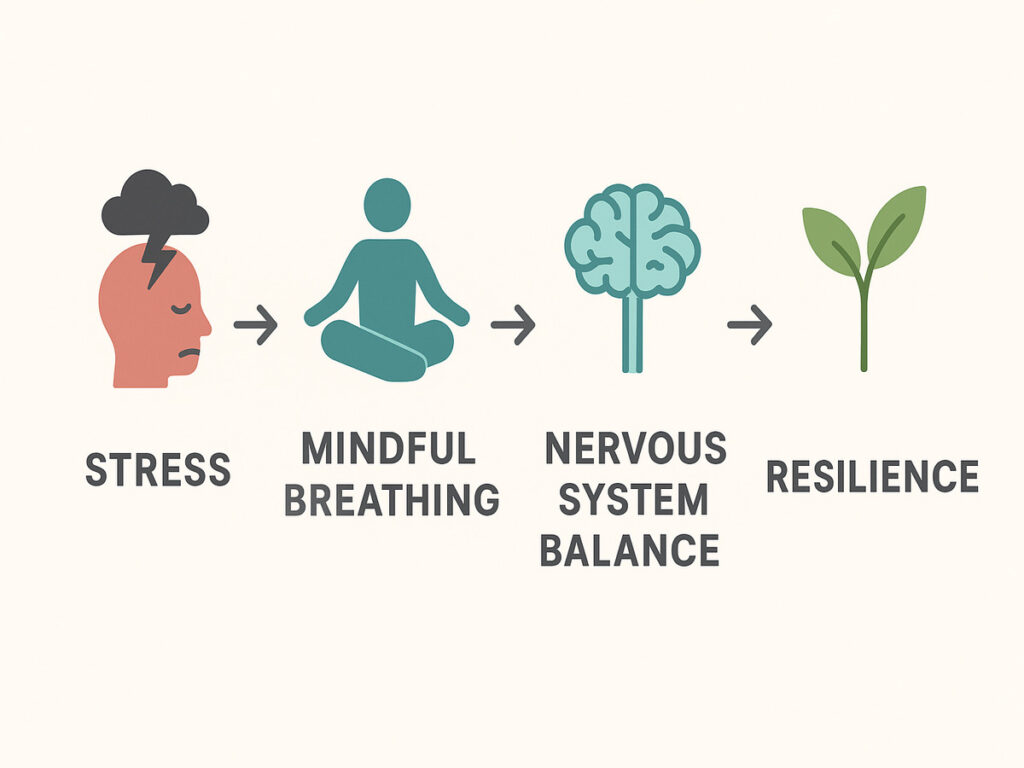
This is where mindful breathing workouts emerge as a simple, accessible, and scientifically validated tool. Unlike casual deep breathing, mindful breathing workouts are structured techniques designed to rewire the body’s stress response, enhance mental clarity, and strengthen long-term resilience.

The Science of Breath and Stress Response
Breathing is the only autonomic function we can consciously control. This makes it a powerful bridge between body and mind.
- Sympathetic Nervous System (SNS): Governs the fight-or-flight response. Stress accelerates heart rate, increases cortisol, and narrows focus.
- Parasympathetic Nervous System (PNS): Activates rest-and-digest mode, lowering heart rate and cortisol while promoting relaxation.
By practicing structured mindful breathing, we intentionally engage the vagus nerve, triggering the PNS and rebalancing stress hormones.
📊 Statistic: A 2023 NIH study found that daily mindful breathing reduced cortisol by up to 25% within 4 weeks—a non-pharmaceutical stress management solution.
Proven Benefits of Mindful Breathing Workouts
1. Stress Reduction
Controlled breathing calms the amygdala (the brain’s fear center), reducing anxiety and tension.
2. Enhanced Focus & Productivity
Mindful breathing boosts prefrontal cortex activity, improving decision-making and concentration.
3. Cardiovascular Wellness
Slow breathing lowers blood pressure and reduces heart disease risk over time.
4. Sleep Improvement
Breathing techniques like 4-7-8 help transition the body into restful sleep states.
5. Emotional Regulation
Supports resilience by lowering reactivity to stress triggers.
Expert Quote:
“Mindful breathing is one of the fastest and most cost-effective ways to shift the body from stress mode to healing mode,” says Dr. Rachel Greene, PhD, Neuroscientist at Stanford University.
How Stress Resilience Is Built Through Breath
Stress resilience isn’t about avoiding stress altogether—it’s about how quickly and effectively you recover.
Breathing workouts build resilience by:
- Training the nervous system to recover faster.
- Increasing heart rate variability (HRV), a marker of stress tolerance.
- Strengthening emotional control during challenging moments.
📊 Statistic: Harvard Health research shows individuals with higher HRV from daily breathing practices were 40% less likely to develop stress-related disorders.
Types of Mindful Breathing Workouts
| Breathing Method | Technique | Benefits | When to Use |
|---|---|---|---|
| Box Breathing (4-4-4-4) | Inhale 4s → Hold 4s → Exhale 4s → Hold 4s | Calms mind, stabilizes focus | High-stress meetings |
| 4-7-8 Breathing | Inhale 4s → Hold 7s → Exhale 8s | Promotes deep sleep | Before bedtime |
| Alternate Nostril Breathing | Inhale through one nostril, exhale through the other | Balances hemispheres, reduces anxiety | Morning routine |
| Resonance Breathing (5 breaths/min) | Inhale 5.5s → Exhale 5.5s | Boosts HRV, lowers BP | Daily practice |
| Breath Counting Meditation | Count breaths (1–10) in cycles | Improves mindfulness | Anytime stress arises |
Actionable Daily Breathing Strategies
- Morning Reset: Start with 5 minutes of box breathing to prime calm focus.
- Midday Pause: Use alternate nostril breathing before lunch to avoid energy crashes.
- Stress Interruption: In heated situations, practice 3 rounds of 4-7-8 breathing.
- Digital Detox Breaths: After screen time, do 5 minutes of resonance breathing.
- Night Wind-Down: Commit to a 10-minute guided breathing meditation before bed.
💡 Tip: Pair mindful breathing with mindful walking for compounded benefits.
Practical Checklist for Stress-Resilient Breathing
✔ 2+ structured mindful breathing sessions per day
✔ Track HRV with a smartwatch or app
✔ Combine breathing with posture awareness
✔ Practice at least 10 minutes daily, building up to 30 minutes
✔ Use ambient music or binaural beats for focus
✔ Journal after sessions to reinforce resilience benefits
Expert Insights on Mindful Breathing
- “Breathing workouts are free, accessible, and scalable. Unlike pharmaceuticals, they come with no side effects,” — Dr. Karen Holt, MD, Integrative Medicine Specialist.
- “HRV improvements from breathwork rival those from endurance training,” — Dr. Miguel Alvarez, Cardiologist, Mayo Clinic.
- “Mindful breathing bridges ancient practices and modern neuroscience, making it both timeless and futuristic,” — Dr. Ayesha Malik, Mental Health Researcher.
Common Myths & FAQ
Q1: Is mindful breathing just meditation rebranded?
A: No. Meditation often includes breath, but mindful breathing workouts are structured, measurable, and physiologically targeted.
Q2: Can breathing alone replace therapy?
A: No, but it’s a powerful complementary tool alongside therapy, medication, or coaching.
Q3: Does it take years to see results?
A: Benefits start immediately, with measurable HRV and cortisol improvements in weeks.
Q4: Can kids and seniors practice these workouts?
A: Yes. Techniques like box breathing and resonance breathing are safe and effective across all ages.
Authoritative Resources
For further research and credibility, refer to:
- National Institutes of Health (NIH) – Stress & Breathing Studies
- Harvard Health Publishing – Breathing for Stress Management
- American Psychological Association (APA) – Stress and Resilience Strategies
- Mayo Clinic – Breathing Exercises for Relaxation
Conclusion & Call-to-Action
In 2025, when stress is at an all-time high, mindful breathing workouts stand out as a free, effective, and accessible secret weapon. With consistent practice, they not only reduce immediate stress but also build resilience for the long run—strengthening mental, emotional, and physical health.
👉 Next Step: Start with one breathing workout today. Dedicate just 5 minutes in the morning and 5 minutes at night. Track your progress, and watch your stress resilience grow week by week.
the best information i have ever read